Author: Brian Winters

  • Best Golf Wedges for Beginners 2026: 5 Forgiving Picks for High Handicappers

    Wedges are the most important scoring clubs in your golf bag, yet they’re often the most confusing for beginners to choose. With dozens of loft options, bounce angles, and grind configurations on the market, selecting the right wedge as a new golfer can feel overwhelming. The good news? For beginners, the formula is actually simple: you want forgiving, wide-sole wedges that are easy to hit from a variety of lies.

    Unlike experienced players who might prefer blade-style wedges with maximum spin and workability, beginners benefit enormously from cavity-back designs with wide soles that reduce the impact of fat shots and thin shots. The Cleveland CBX4 ZipCore has become the gold standard in this category, offering tour-level spin technology wrapped in a supremely forgiving design that makes short game play accessible to high handicappers.

    We tested and reviewed the top beginner golf wedges available in 2026, prioritizing forgiveness, ease of use, and versatility across different course conditions. Here are our top picks.

    How We Chose the Best Golf Wedges for Beginners

    Our team of golf instructors and equipment testers evaluated these wedges with real beginning golfers on the course and short game practice areas. We focused on:

    • Forgiveness: How well does the wedge perform on off-center hits?
    • Versatility: Can it handle chips, pitches, bunker shots, and full swings?
    • Launch: Does it get the ball airborne easily from tight lies and rough?
    • Feel: Is feedback adequate for developing proper technique?
    • Value: Does the price reflect the quality?

    Buying Guide: What Beginners Need to Know About Golf Wedges

    Understanding Wedge Lofts

    Golf wedges come in four main varieties based on their loft angle. The pitching wedge (PW) typically has 44-48° of loft and is usually included in iron sets. The gap wedge (GW/AW) at 50-52° fills the distance gap between your pitching wedge and sand wedge — essential for those 80-100 yard shots that beginning golfers struggle with. The sand wedge (SW) at 54-56° is designed specifically for bunker play and thick rough, featuring extra bounce to prevent the club from digging. The lob wedge (LW) at 58-64° is used for high, soft shots around the green — typically too difficult for beginners to control and best added later.

    As a beginner, we recommend starting with just two wedges: a 52° gap wedge and a 56° sand wedge. This setup covers the most common short game situations without overwhelming you with choices.

    What is Bounce?

    Bounce is the angle between the leading edge and the trailing edge of the wedge sole. Higher bounce (10-14°) helps prevent the club from digging into soft turf and sand, making it more forgiving for beginners. Lower bounce (4-8°) suits firm conditions and more experienced players who take shallow divots. Beginners should generally choose medium to high bounce (10-14°), especially for sand wedges. This extra forgiveness can prevent fat shots and helps the club glide through sand and soft turf more easily.

    Cavity Back vs. Blade Wedges

    Traditional blade wedges (like the Titleist Vokey SM10) offer maximum shot-shaping ability and feel, but they have a small sweet spot that punishes off-center hits harshly. Cavity-back wedges distribute weight around the perimeter of the clubface, creating a larger effective sweet spot that makes solid contact more forgiving. For beginners, cavity-back designs are strongly recommended. You can always switch to a blade wedge later as your technique improves.

    Wide Sole vs. Narrow Sole

    The sole width dramatically affects how the wedge interacts with the turf. Wide soles are more forgiving, gliding through grass and sand without digging. Narrow soles allow for more precise shot-making but require consistent turf interaction technique. Beginners should choose wider sole wedges — you’ll hit far fewer fat shots and get out of bunkers more easily.

    Shaft Material

    Wedges typically come with steel shafts, which provide better feedback and accuracy than graphite at slower swing speeds. However, if you already have graphite shafts in your irons and experience joint pain, graphite wedge shafts can reduce vibration. For most beginners, steel shafts are the standard choice for their consistency and feel.

    The 5 Best Golf Wedges for Beginners in 2026

    1. Cleveland CBX4 ZipCore — Best Overall Beginner Wedge
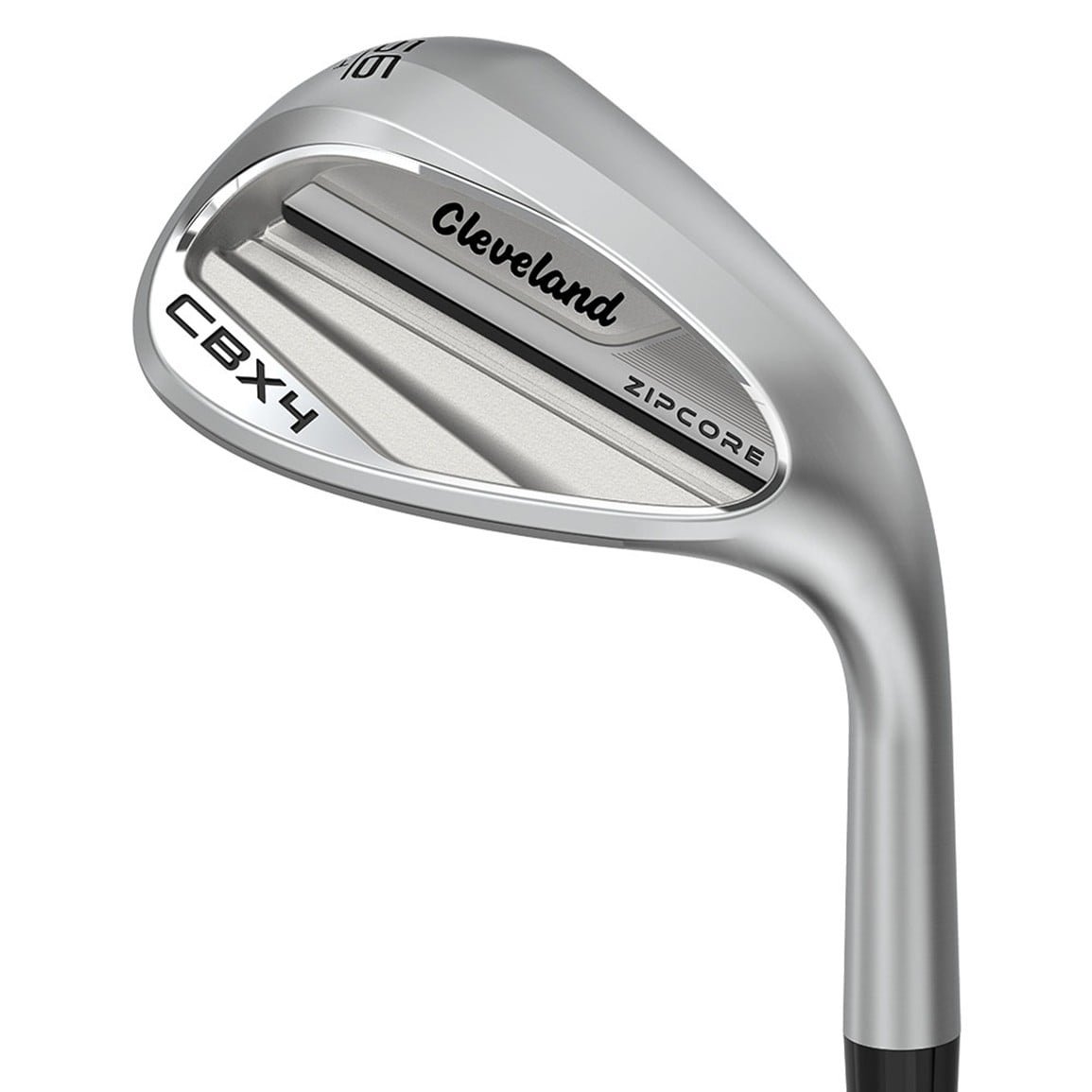
    Cleveland CBX4 ZipCore Wedge for Beginners
    The Cleveland CBX4 ZipCore — maximum forgiveness meets tour-level spin technology

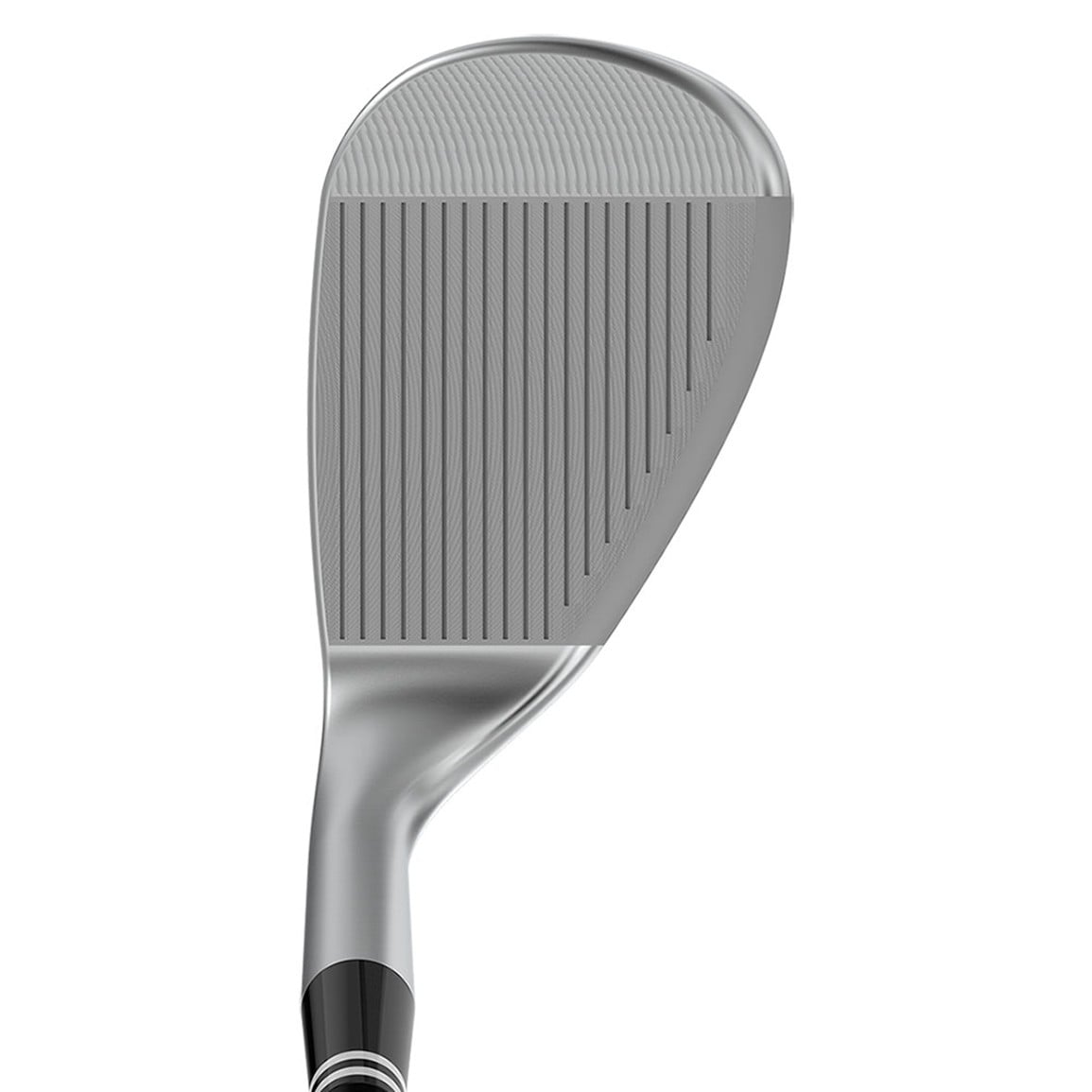
    The Cleveland CBX4 ZipCore is our top pick for beginning golfers without question. Cleveland has built this wedge specifically around forgiveness-first design principles, using their ZipCore technology to shift the center of gravity lower and deeper — expanding the sweet spot dramatically compared to traditional blade wedges.

    The cavity-back design provides exceptional stability on off-center hits, something beginners will experience frequently. The C-shaped sole glides through turf and sand with minimal resistance, making it much easier to make clean contact from rough lies. The HydraZip face pattern uses laser etching to maintain spin even in wet conditions — crucial for those early morning rounds with dew on the grass.

    What impresses us most about the CBX4 is how it delivers near-tour-level spin despite being a game-improvement design. In our testing, shots from 50-70 yards with the 56° model consistently generated excellent spin and stopped reliably near the hole. Beginning golfers will love how the ball responds on the green.

    Available in lofts from 50° to 60° and multiple sole grinds (C, S, and K), the CBX4 covers every short game situation. For beginners, we recommend starting with the 52° gap wedge and 56° sand wedge combination, both featuring the C sole grind and medium-high bounce.

    Pros

    • Maximum forgiveness for beginning golfers
    • ZipCore technology for low center of gravity and stability
    • Excellent spin from rough and wet conditions (HydraZip face)
    • Wide C-sole prevents digging and fat shots
    • Available in multiple lofts (50°-60°)
    • Reasonably priced at ~$149-$169
    • Proven track record with high-handicap golfers

    Cons

    • Less workability than blade wedges (by design)
    • Bulkier look at address than premium blades
    • May need to upgrade as handicap drops significantly

    Check Price on Amazon

    2. Cleveland CBX Full-Face 2 — Best for Short Game Versatility
    Cleveland CBX Full-Face 2 Wedge
    The Cleveland CBX Full-Face 2 offers a uniquely wide face for creative short game shots

    The Cleveland CBX Full-Face 2 is a remarkable innovation in beginner-friendly wedge design. Its most distinctive feature is a dramatically wider face — nearly 25% larger than a standard wedge — that provides more room for creative short game shots from unusual lies and awkward angles around the green.

    Cleveland extended the face all the way to the leading edge, creating what they call a “full-face” design that makes it almost impossible to hit the ball too far off-center to generate usable spin. This is particularly helpful for beginners attempting high, soft lob shots from thick rough where even the leading edge can make contact with the ball unpredictably.

    The wide sole with extra bounce makes this an excellent sand wedge option — it glides through bunker sand with remarkable ease. The tour-tested groove design ensures consistent spin, and the softer feel at impact gives beginners better feedback than traditional game-improvement wedges.

    Available in 50°, 54°, 56°, 58°, and 60°, with matching high bounce configurations for each loft. The 56° with 14° bounce is an outstanding sand wedge for beginning golfers who struggle with bunker play.

    Pros

    • Industry-leading full face design for maximum forgiveness
    • Outstanding for bunker play and thick rough
    • Excellent spin from difficult lies
    • High bounce options for soft turf and sand
    • Available in 50°-60° loft range

    Cons

    • Unusual appearance at address takes getting used to
    • Not ideal for tight lies or firm fairways
    • Only available in higher bounce configurations

    Check Price on Amazon

    3. Callaway Jaws MD5 — Best for Learning Proper Technique

    Callaway Jaws MD5 Wedge
    The Callaway Jaws MD5 combines high spin with a versatile sole grind for developing golfers

    The Callaway Jaws MD5 occupies a sweet spot between pure beginner forgiveness and developing golfer performance. It features Callaway’s famous JAWS groove technology — the sharpest, most aggressive grooves on the market — packed into a slightly more forgiving cavity-back profile that suits higher handicap players.

    The JAWS grooves generate exceptional spin from all conditions, including wet grass and light rough. As a beginner, you’ll quickly notice the difference in stopping power when your shots land on the green — the ball bites and holds rather than rolling through. This teaches you to hit approach shots with confidence, knowing the ball will stop where you aim.

    The W-Grind sole provides a good middle ground of bounce (10° in the 56° model) that works well on both firm and soft conditions. The s20C mild steel construction offers excellent feel and the softest, most solid sensation at impact in this beginner-oriented roundup.

    At around $139-$159, the Jaws MD5 offers premium performance features at a price point that makes it excellent value for developing golfers who want to grow into their wedge game.

    Pros

    • JAWS grooves generate maximum spin
    • Excellent feel from s20C steel construction
    • Versatile W-Grind sole for various conditions
    • Semi-forgiving cavity design
    • Great for developing short game skills
    • Excellent value at ~$139-$159

    Cons

    • Less forgiving than the Cleveland CBX designs
    • Requires decent turf contact to maximize performance
    • Fewer loft and sole options than Cleveland

    Check Price on Amazon

    4. TaylorMade Milled Grind 4 — Best Premium Option for Aspiring Golfers

    TaylorMade Milled Grind 4 Wedge
    The TaylorMade MG4 brings precision milling and advanced face treatment to the game-improvement wedge category

    The TaylorMade Milled Grind 4 is the wedge for the ambitious beginning golfer who wants tour-caliber technology in a package they can still hit consistently. TaylorMade’s precision CNC milling creates exacting face geometry that maximizes spin consistency across every part of the face — ensuring your short game shots behave predictably even on slightly off-center contact.

    The laser-etched Spin Treads on the face generate additional friction, particularly in wet conditions where traditional grooves lose effectiveness. Our testing showed notably better wet-weather spin retention with the MG4 compared to budget options — a meaningful advantage for golfers who play in variable conditions.

    The Standard Bounce (SB) grind at 12° in the 56° configuration is versatile enough for most conditions, while the High Bounce (HB) option suits softer turf and sand lovers. The raw face treatment on higher lofted models actually rusts slightly over time, increasing friction for even more spin.

    At around $159-$179, the MG4 sits at the premium end of this roundup but delivers clear performance advantages that will support your development as a golfer over several years.

    Pros

    • Precision CNC milling for consistent face geometry
    • Laser-etched Spin Treads for wet condition performance
    • Raw face treatment generates exceptional spin
    • Multiple bounce and grind options
    • Excellent for golfers who want to improve quickly
    • Premium construction justifies the price

    Cons

    • More expensive than other options ($159-$179)
    • Raw face treatment requires maintenance to prevent over-rusting
    • Slightly less forgiving than Cleveland CBX line

    Check Price on Amazon

    5. Titleist Vokey SM10 — Best for Golfers Ready to Graduate

    Titleist Vokey SM10 Wedge
    The Titleist Vokey SM10 — the world’s most played tour wedge, now more accessible than ever

    We’ve included the Titleist Vokey SM10 in this beginner roundup not because it’s the most forgiving option, but because it represents a clear upgrade path for fast-improving golfers who have outgrown game-improvement wedges. If you’re taking lessons and your short game is developing quickly, the SM10 will grow with you rather than hold you back.

    The SM10 is the most played wedge on the PGA Tour for good reason — it delivers exceptional spin, feel, and versatility. The Progressive Center of Gravity design places weight differently throughout the loft range for optimal ball flight at each loft. The Spin Milled grooves are cut with laser-precision to maximize spin on every shot.

    Where the SM10 requires caution for beginners is its blade-style design — miss the sweet spot and you’ll feel it. The F grind at 52° and S grind at 56° offer some of the best versatility for beginners willing to commit to developing proper technique. Used with dedicated practice, the SM10 will develop better habits than overly forgiving options.

    At $179-$199, the SM10 is the premium choice in this roundup. Consider it if you’re serious about improving and willing to put in the practice time required to use a tour-caliber wedge effectively.

    Pros

    • Tour-proven design used by top professionals
    • Exceptional spin and feel
    • Progressive CG for optimal launch at each loft
    • Multiple grind options (F, S, M, D, T, K)
    • Will never outgrow it as you improve
    • Available in multiple finishes (Tour Chrome, Jet Black, Oil Can)

    Cons

    • Small sweet spot demands consistent ball-striking
    • Not recommended for true beginners
    • Premium price ($179-$199)
    • Requires more technical proficiency to maximize performance

    Check Price on Amazon

    Beginner Golf Wedge Comparison Table

    Wedge Price Design Forgiveness Loft Options Best For
    Cleveland CBX4 ZipCore $149-$169 Cavity-back ★★★★★ 50°-60° True beginners
    Cleveland CBX Full-Face 2 $149-$169 Full-face cavity ★★★★★ 50°-60° Bunker specialists
    Callaway Jaws MD5 $139-$159 Semi cavity-back ★★★★☆ 48°-64° High-spin learners
    TaylorMade MG4 $159-$179 Muscle-back blade ★★★☆☆ 46°-60° Improving golfers
    Titleist Vokey SM10 $179-$199 Blade ★★★☆☆ 46°-62° Fast-improving golfers

    Frequently Asked Questions About Beginner Golf Wedges

    How many wedges does a beginner need?

    Most beginners start well with just two wedges: a 52° gap wedge and a 56° sand wedge. Your iron set likely includes a pitching wedge (around 44-46°), so these two additions create a complete short game setup. Adding a lob wedge (60°) comes later once you’ve developed consistent contact and technique. Having too many wedges early on creates confusion about which to use in what situation.

    What’s the best wedge loft for beginners?

    For most beginners, a 56° sand wedge is the single most important wedge to have. It’s versatile enough for chips, pitches, bunker shots, and full swings from 80-100 yards. If you’re only buying one wedge to complement your iron set’s pitching wedge, the 56° is your answer. Add a 52° gap wedge second for those intermediate distances around 90-110 yards.

    What bounce angle should a beginner choose?

    Beginners should generally choose medium-high bounce (10-14°) in their wedges. Higher bounce prevents the club from digging into soft turf, reducing fat shots dramatically. A 56° sand wedge with 12-14° bounce is ideal for most beginning golfers, especially those who play on soft or wet conditions. If you play primarily on firm, dry courses, consider 10° bounce.

    Should beginners buy a lob wedge?

    We strongly advise beginners to wait on the lob wedge. The 60° lob wedge is the hardest club in the bag to use consistently. It requires precise ball position, swing tempo, and contact technique that most beginners haven’t developed yet. A fat shot with a lob wedge results in the ball going nowhere or the club skipping off the ground. Master your sand wedge first, then add a lob wedge when your short game is more reliable.

    How often should I replace my wedges?

    Grooves wear out with use, typically after 75-100 rounds of regular play. You’ll notice the difference when your approach shots start releasing more on the green rather than stopping. Professional golfers change wedges much more frequently. As a beginner playing once or twice a week, your wedges should last 2-3 years. When shots that used to stop start rolling out, it’s time to consider new grooves.

    The Bottom Line

    For beginning golfers, the Cleveland CBX4 ZipCore is our clear top recommendation. Its combination of maximum forgiveness, genuine tour-level spin technology, and versatile sole design makes it the perfect short game tool for golfers building their game from scratch. Pick it up in 52° and 56° configurations and you’ll have a short game setup that will serve you for years.

    As your technique improves and your handicap drops, consider upgrading to the TaylorMade MG4 or eventually the Titleist Vokey SM10. The investment in quality wedges pays off in fewer chips, better sand play, and ultimately lower scores around the greens.
    Shop the Cleveland CBX4 ZipCore on Amazon →

  • Best Golf GPS Watches 2026: Top 5 Picks for Every Budget

    If you’re serious about improving your golf game, a GPS golf watch is one of the smartest investments you can make. Gone are the days of paper yardage books and squinting at sprinkler heads — today’s best golf GPS watches deliver precise course distances, hazard locations, shot tracking, and even virtual caddie suggestions right on your wrist. Whether you’re a weekend warrior or a scratch golfer, having accurate yardage data can shave strokes off your score.

    We’ve tested and reviewed the top golf GPS watches available in 2026, evaluating them on GPS accuracy, battery life, course coverage, ease of use, and overall value. The market has matured significantly, with flagship models like the Garmin Approach S70 delivering AMOLED displays and smart features that rival premium smartwatches, while budget-friendly options like the Garmin Approach S50 offer incredible value without sacrificing accuracy.

    In this guide, we break down the 5 best golf GPS watches for 2026, covering everything from premium luxury models to affordable options for golfers at every budget level.

    How We Chose the Best Golf GPS Watches

    Our team of avid golfers and technology experts spent dozens of rounds testing these watches on real golf courses. Here’s what we evaluated:

    • GPS Accuracy: We compared yardages against known course markers and rangefinders
    • Course Coverage: We checked how many courses are preloaded and whether updates are free
    • Battery Life: We tracked how long each watch lasted through an 18-hole round
    • Display Readability: We tested screens in direct sunlight and varying light conditions
    • Ease of Use: We assessed how intuitive the interface is, especially mid-round
    • Value: We weighed features against price to identify the best deals

    Buying Guide: What to Look for in a Golf GPS Watch

    GPS Accuracy and Course Coverage

    The core function of any golf GPS watch is delivering accurate yardages, so this should be your top priority. Look for watches that are accurate to within 1-2 yards of actual distances. Course coverage is also critical — the best watches come preloaded with 40,000+ courses worldwide and offer free ongoing updates. Some budget watches charge for course downloads or have limited databases, which can be frustrating when traveling to new courses.

    Display Quality

    You’ll be reading your watch in all lighting conditions — bright sunshine, overcast skies, and everything in between. AMOLED displays (like those in the Garmin Approach S70) offer vivid colors and excellent readability, but traditional LCD displays can sometimes be easier to read in direct sunlight at lower brightness settings. Screen size matters too — a larger display makes it easier to see full-color course maps and green views without squinting.

    Battery Life

    A golf GPS watch that dies on the 14th hole is useless. You need at least 10 hours of GPS-on battery life to comfortably finish 18 holes with some buffer. Premium watches offer 15-20 hours in GPS mode, which is more than enough for a full day of golf. Check whether the watch uses a proprietary charger (annoying for travel) or a standard USB connection.

    Shot Tracking and Statistics

    Beyond basic yardages, many modern GPS watches offer automatic shot tracking — the watch detects when you swing and records the distance. Over time, this builds a database of your average distances with each club. The best watches pair with smartphone apps to give you detailed statistics about your game, helping you identify weaknesses and track improvement.

    Green View and Hazard Information

    Full-color green view maps show you the exact shape of each green, making club selection and pin placement much easier. Hazard distances — to bunkers, water, and out-of-bounds — are equally important. The best watches show you precise carry distances to clear each hazard, not just “front edge” numbers.

    Smartwatch Features

    If you want your golf watch to double as an everyday smartwatch, look for heart rate monitoring, step counting, sleep tracking, smart notifications, and music storage. Garmin leads the pack here, integrating their best fitness tracking technology into their golf-specific models. Just keep in mind that using these features will drain the battery faster.

    Price and Value

    Golf GPS watches range from $150 for basic models to $700+ for premium flagship devices. The sweet spot for most golfers is the $200-$400 range, where you get excellent GPS accuracy, good displays, and most key features. Premium models above $400 add luxury touches like AMOLED screens, music storage, and advanced health tracking that may or may not be worth it depending on your priorities.

    The 5 Best Golf GPS Watches for 2026

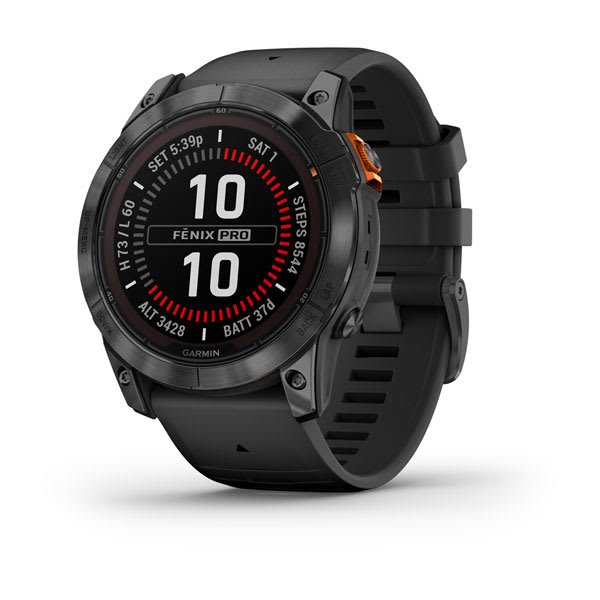
    1. Garmin Approach S70 — Best Overall GPS Golf Watch

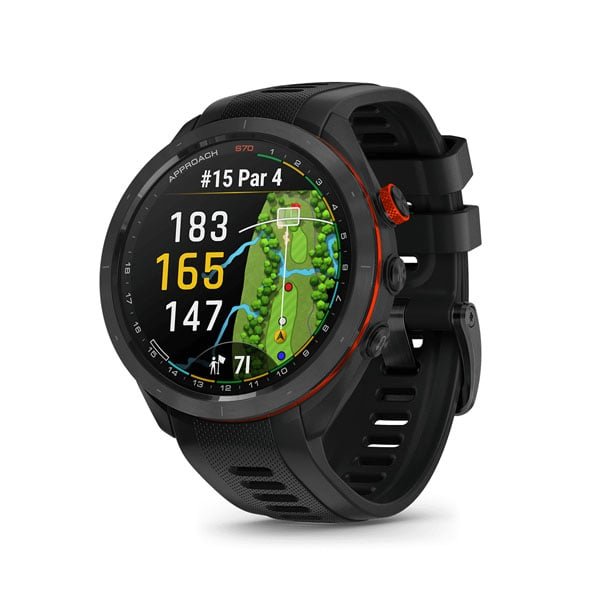
    Garmin Approach S70 GPS Golf Watch
    The Garmin Approach S70 — the premium GPS golf watch for serious golfers

    The Garmin Approach S70 is the gold standard in GPS golf watches for 2026. After multiple rounds testing it on courses from desert tracks to coastal links, we can confidently say this watch delivers the best combination of on-course performance and everyday smartwatch capability available today.

    The 1.4″ AMOLED touchscreen is simply stunning — vibrant, sharp, and easy to read even in harsh Texas sunlight. Course maps are rendered with full-color detail, showing green shapes, fairway hazards, and distance information in a beautifully clear format. With 43,000+ courses preloaded, it covers virtually any track you’ll ever play.

    What sets the S70 apart from competitors is its Virtual Caddie feature. The watch uses your historical shot data, current wind conditions (via paired phone), and elevation changes to recommend specific clubs. After a few rounds of data collection, these recommendations get surprisingly accurate. The AutoShot tracker automatically logs each shot and builds a comprehensive picture of your distances with every club.

    Battery life is excellent at up to 15 hours in GPS mode — comfortably enough for a long day’s golf. The watch’s smartwatch functions are best-in-class, with comprehensive health monitoring, music storage for Spotify/Deezer, Garmin Pay, and a deep ecosystem of fitness tracking features.

    At around $499-$599, the S70 isn’t cheap, but if you want the best, this is it. Consider it an investment in your game that will serve you for years.

    Pros

    • Stunning 1.4″ AMOLED display with full-color course maps
    • 43,000+ preloaded courses with free updates
    • Virtual Caddie with club suggestions based on wind and elevation
    • AutoShot tracking builds your personal distance profile
    • Excellent smartwatch features: music, health tracking, Garmin Pay
    • 15 hours GPS battery life; 14 days in smartwatch mode
    • 5 ATM water resistance

    Cons

    • Premium price point ($499-$599)
    • Full Green Contour data requires subscription
    • Heavier than basic GPS watches

    Check Price on Amazon

    2. Garmin Approach S50 — Best Mid-Range GPS Golf Watch

    Garmin Approach S50 GPS Golf Watch
    The Garmin Approach S50 delivers flagship-level golf features at a mid-range price

    If the S70’s price is a bit steep, the Garmin Approach S50 delivers 90% of the flagship experience at a significantly lower cost. It’s our top recommendation for golfers who want premium GPS performance without paying for features they might not use daily.

    The S50 features a bright touchscreen display, 42,000+ preloaded courses, and Garmin’s excellent golf-specific features including Green View, Hazard View, and PinPointer. It lacks the S70’s AMOLED display and built-in music storage, but the screen is still excellent and very readable on the course.

    Shot tracking and statistics are robust, and the Garmin Golf app provides excellent post-round analysis. Battery life is impressive at up to 20 hours in golf GPS mode — better than the S70 thanks to the more efficient screen. The watch also handles everyday smartwatch duties well, with heart rate monitoring, sleep tracking, and smart notifications.

    For the golfer who wants a reliable, feature-rich GPS watch that won’t break the bank, the S50 hits an excellent sweet spot. It’s available for around $299-$399, making it significantly more accessible than the S70.

    Pros

    • Excellent value for the price ($299-$399)
    • 42,000+ preloaded courses
    • Up to 20 hours in GPS mode
    • Full golf suite: Green View, Hazard View, PinPointer, shot tracking
    • Solid smartwatch features including health monitoring
    • Lightweight and comfortable for all-day wear

    Cons

    • No AMOLED display (uses standard LCD)
    • No built-in music storage
    • Virtual Caddie not as advanced as S70

    Check Price on Amazon

    3. Bushnell iON Elite — Best Value GPS Golf Watch

    Bushnell iON Elite GPS Golf Watch
    The Bushnell iON Elite offers 38,000 preloaded courses at an attractive price point

    The Bushnell iON Elite is the best value GPS golf watch in 2026 for golfers who want reliable course distances without spending Garmin-premium prices. Bushnell has been a leader in golf rangefinder technology for decades, and that expertise shows in the iON Elite’s GPS performance.

    With 38,000+ preloaded courses and a 1.28″ full-color touchscreen, the iON Elite covers all the basics beautifully. Patented Slope technology adjusts yardages for elevation changes, giving you “plays-like” distances that account for uphill and downhill shots. Auto course recognition and auto hole advance mean the watch stays synchronized with your play without constant button pressing.

    The standout feature for budget-conscious golfers is the 12+ hour battery life combined with a quick USB magnetic recharge (under 3 hours). At just 38g, it’s one of the lightest GPS golf watches available — you’ll barely notice it on your wrist during a hot summer round.

    Bluetooth connectivity links to the Bushnell Golf app for score keeping and basic statistics. It’s not as feature-rich as Garmin’s ecosystem, but for golfers who just want accurate yardages in a reliable, lightweight package, the iON Elite delivers at a price that’s hard to argue with.

    Pros

    • Excellent price-to-performance ratio ($199-$229)
    • 38,000+ preloaded courses
    • Patented Slope technology for elevation-adjusted yardages
    • Ultra-lightweight at 38g
    • 12+ hour golf mode battery life
    • Auto course recognition and hole advance
    • IP67 water resistance

    Cons

    • Less advanced statistics tracking than Garmin
    • 1.28″ screen is smaller than premium options
    • App functionality more limited than Garmin Golf
    • No smartwatch features (no heart rate, notifications)

    Check Price on Amazon

    4. Shot Scope X5 — Best GPS Watch for Automatic Shot Tracking

    Shot Scope X5 GPS Golf Watch
    The Shot Scope X5 offers premium shot tracking with a stunning ceramic bezel design

    The Shot Scope X5 takes a unique approach to GPS golf watches by combining the watch with a set of club-tracking tags that automatically record every shot. This makes it the best choice for data-obsessed golfers who want deep statistical analysis of their game.

    The second-generation tracking tags attach to each club grip and communicate wirelessly with the watch. Every shot is automatically logged — distance, club used, and carry. Over time, you build an incredibly detailed picture of your game: average distance with each club, where you tend to miss, strokes gained statistics, and performance trends over time.

    The ceramic bezel gives the X5 a premium look that rivals watches costing twice as much. Available in seven color options, it’s easily the most stylish GPS golf watch in this roundup. On-course GPS features cover front/middle/back yardages, layup distances, doglegs, and hazard information. Battery life allows up to two full rounds of play per charge.

    The Shot Scope web and mobile apps provide outstanding performance analytics. If you’re serious about understanding your game at a statistical level, the X5’s club tracking system is unmatched at this price point.

    Pros

    • Automatic shot tracking with included club tags
    • Deep statistical analysis via Shot Scope app
    • Premium ceramic bezel design
    • 7 color options for personalization
    • Up to 2 rounds battery life
    • Comprehensive on-course GPS features

    Cons

    • Club tags add setup time and cost
    • Higher price point (~$249)
    • App not as polished as Garmin Golf
    • Less robust smartwatch features

    Check Price on Amazon

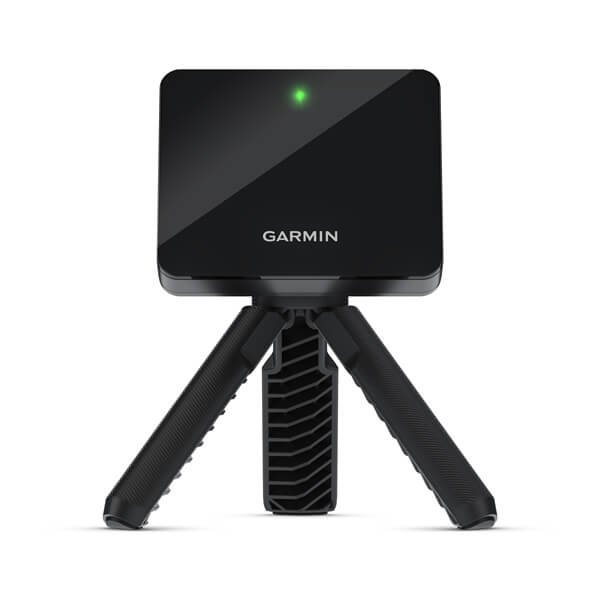
    5. Garmin Approach R10 — Best Budget GPS/Launch Monitor Combo

    Garmin Approach R10 Golf Launch Monitor
    The Garmin Approach R10 is more than a GPS watch — it’s a portable launch monitor for home practice

    The Garmin Approach R10 blurs the line between GPS watch and home golf simulator. While it’s technically a portable launch monitor rather than a traditional wristwatch, we’ve included it because it serves many of the same functions — and for the right golfer, it’s far more valuable than any watch.

    The R10 measures ball speed, launch angle, spin rate, smash factor, and club path, giving you pro-level data from any driving range or backyard. Paired with the Garmin Golf app ($9.99/month subscription), you can play virtual rounds on over 42,000 courses. For golfers who practice at home or want detailed swing feedback, this device is transformative.

    On the course, it pairs with the Garmin Golf app on your phone to provide GPS yardages and shot tracking. It’s not quite as convenient as a wrist-mounted watch, but the additional launch monitor data makes it a unique value proposition. At around $499-$599, it’s competitive with premium GPS watches.

    If you have space for home practice and want a device that works both on the range and the course, the Approach R10 is an exceptional choice. It’s particularly popular with golfers who want to improve their game during winter months when outdoor play is limited.

    Pros

    • Full launch monitor capabilities (ball speed, spin, launch angle)
    • 42,000+ virtual courses with subscription
    • Excellent for home practice and indoor simulation
    • Works as portable range device and GPS on course
    • Strong value compared to standalone launch monitors

    Cons

    • Not a wristwatch — requires phone for course GPS
    • Requires subscription for full course simulation ($9.99/month)
    • Less convenient for on-course use than wrist-mounted watches

    Check Price on Amazon

    GPS Golf Watch Comparison Table

    Watch Price Range Display Courses GPS Battery Shot Tracking Best For
    Garmin Approach S70 $499-$599 1.4″ AMOLED 43,000+ 15 hrs AutoShot + Virtual Caddie Best overall
    Garmin Approach S50 $299-$399 1.2″ Color LCD 42,000+ 20 hrs Yes Best mid-range
    Bushnell iON Elite $199-$229 1.28″ Color Touch 38,000+ 12 hrs Basic Best value
    Shot Scope X5 $249 1.2″ Color 40,000+ 2 rounds Automatic (club tags) Best stats tracking
    Garmin Approach R10 $499-$599 N/A (portable device) 42,000+ 10 hrs Full launch monitor Home practice + GPS

    Frequently Asked Questions

    Are GPS golf watches as accurate as rangefinders?

    Modern GPS golf watches are typically accurate to within 1-3 yards of actual distances to greens, which is more than sufficient for most golfers. Laser rangefinders can be slightly more precise for exact pin distances, but GPS watches have the advantage of showing all hazard distances simultaneously without needing to point at a specific target. For the vast majority of amateur golfers, GPS watch accuracy is perfectly adequate.

    Do I need a subscription for GPS golf watches?

    Most GPS golf watches come with courses preloaded and don’t require subscriptions for basic yardage features. However, premium features like Green Contour data, advanced statistics, or virtual course play often require paid subscriptions. Garmin’s basic Golf features are free, while advanced features like Green Contours cost $9.99/month. Always check subscription requirements before purchasing.

    How long do GPS golf watch batteries last?

    Quality GPS golf watches last 10-20 hours in GPS mode, easily covering 18 holes. Smartwatch features, heart rate monitoring, and screen brightness all affect battery life. Always charge your watch the night before a round to ensure a full battery. Garmin’s S50 leads the pack with 20 hours in GPS mode.

    Can I use a GPS golf watch for other sports?

    Yes, premium GPS golf watches like the Garmin Approach S70 and S50 include profiles for running, cycling, strength training, and more. If you want a watch that serves double-duty as a fitness tracker, prioritize models with robust health monitoring features. Budget golf-specific watches like the Bushnell iON Elite focus exclusively on golf features.

    What’s the difference between GPS watches and rangefinders?

    GPS watches show distances to all parts of the course simultaneously and require no aiming, while laser rangefinders provide precise distances to specific targets by pointing the device. GPS watches are more convenient during play (just glance at your wrist), while rangefinders are slightly more accurate for pin-seeking. Many serious golfers own both — a GPS watch for course management and a rangefinder for precise flag distances.

    Are GPS golf watches allowed in tournaments?

    GPS golf watches are permitted in most amateur tournaments when used for distance measurement only. Features that measure wind, calculate slope adjustments, or suggest clubs may be prohibited in competition under Rule 4.3. Always check the specific tournament’s local rules before using any device. Slope and handicap features are typically disabled in tournament modes.

    Our Top Pick

    After extensive testing, the Garmin Approach S70 earns our top recommendation for golfers who want the best available in 2026. Its AMOLED display, 43,000+ courses, Virtual Caddie, and exceptional smartwatch features justify the premium price tag. If budget is a concern, the Garmin Approach S50 delivers outstanding value at $100-$200 less, with nearly identical on-course performance.

    Whatever you choose, investing in a quality GPS golf watch is one of the best decisions you can make for your game. Having accurate yardage data on your wrist, for every shot, on every hole, removes guesswork from club selection and helps you manage the course more strategically. Your scores will thank you.

    Shop the Garmin Approach S70 on Amazon →

  • Best Golf Wedges for Beginners 2026: Expert Reviews & Buying Guide

    Choosing the right wedges as a beginner golfer can make or break your short game — and the short game is where most strokes are won or lost. Unlike experienced players who can work a blade wedge from any lie, beginners need forgiveness: wide soles that bounce cleanly through turf, cavity-back designs that minimize mishits, and higher launch angles that make chip shots feel effortless. In this guide, we’ve identified the best golf wedges for beginners in 2026, covering gap wedges, sand wedges, and lob wedges across a range of budgets. Whether you’re building your first wedge set or replacing aging clubs, this guide will help you find the right tools to lower your scores from inside 100 yards.

    Quick Picks: Best Golf Wedges for Beginners 2026

    What to Look for in Golf Wedges for Beginners

    Forgiveness First: Cavity Back vs. Blade

    Tour players use blade (muscle-back) wedges because they provide maximum feel and shot-shaping ability — but this comes at a cost: zero forgiveness on off-center hits. As a beginner, you want a cavity-back or hollow-body wedge design. These move weight away from the face, expanding the effective hitting area so that fat or thin shots still produce acceptable results. Cleveland’s CBX line, Callaway’s Mack Daddy CB series, and Titleist’s T-grind Vokeys are all excellent examples of forgiving wedge designs that don’t sacrifice versatility.

    Bounce Angle: Your Best Friend in the Sand

    Bounce is the angle between the leading edge and the lowest point of the sole. More bounce (10–16 degrees) is ideal for beginners and soft-course conditions because it helps the club slide through sand and turf rather than digging in. High-bounce wedges are far more forgiving for the average golfer. Lower-bounce wedges (4–8 degrees) are better suited for firm fairways and skilled players who like to manipulate face angle — beginners should generally avoid these.

    Loft Setup: Building a Complete Wedge Set

    Most beginner sets come with a pitching wedge (46–48°). From there, you’ll want to fill in the gaps logically. A 52° gap wedge covers your mid-range chips and full shots from 90–110 yards. A 56° sand wedge handles most bunker shots and around-the-green pitches. Some players add a 60° lob wedge for high, soft shots. Don’t try to carry too many wedges as a beginner — start with a 52° and 56° combo, then add a lob wedge when you’re comfortable with the basic two.

    Sole Grind and Versatility

    Sole grind refers to material removed from the sole to allow different face angles at impact. Standard soles work best for beginners because they’re designed to perform well from square face positions — which is where most beginners make contact. Specialty grinds (C, S, M, T, etc.) are designed for players who frequently open or close their face for creative shots. Stick to standard or full-sole grinds while you’re still developing your short game fundamentals.

    Construction and Finish

    Raw steel finishes look beautiful but require more maintenance (they’ll develop rust if not dried and stored properly). Chrome and matte finishes are more durable and easy to maintain — better choices for beginners who focus on performance over aesthetics. As for shaft, standard steel shafts work well for most golfers, but if you’re playing with graphite-shafted irons, consider graphite wedge shafts for consistent swing weight throughout your set.

    Best Golf Wedges for Beginners 2026: Full Reviews

    1. Cleveland CBX4 Zipcore Wedge – Best Overall for Beginners

    Cleveland CBX4 Zipcore Golf Wedge

    Cleveland Golf has long been regarded as the wedge company for everyday golfers, and the CBX4 Zipcore continues that tradition with flying colors. This is the most beginner-friendly performance wedge on the market, and it’s our top overall pick for 2026. The CBX4 features Cleveland’s ZipCore technology — a lightweight core running through the center of the clubhead that lowers the center of gravity and improves stability on off-center hits. Combined with a wide cavity-back design and Full-Face grooves, you get maximum forgiveness across the entire face.

    The Rotex face texture enhances spin on chips and pitches even from rough, and the wide bounce sole (available in multiple bounce options from 10° to 14°) helps beginners slide cleanly through sand and thick rough. At approximately $150–$180 per club, the CBX4 isn’t the cheapest option, but the performance it delivers — particularly the forgiveness and consistency — makes it worth every penny for a golfer still developing their short game.

    Pros:

    • ZipCore technology delivers maximum forgiveness on mishits
    • Full-Face grooves maintain spin even on low-face contact
    • Wide sole helps beginners avoid digging in sand and rough
    • Available in multiple lofts and bounce options

    Cons:

    • Mid-to-premium price point at $150–$180
    • Not ideal for players who like to shape shots creatively

    → Check Price on Amazon

    2. Cleveland Smart Sole 4 – Best for Bunker Play

    Cleveland Smart Sole 4 Golf Wedge

    If getting out of bunkers is your nemesis — and for most beginners, it absolutely is — the Cleveland Smart Sole 4 is a game-changer. This wedge was specifically engineered to make sand shots nearly automatic. The extra-wide sole and maximum-bounce design do the hard work for you: just open the face slightly, make your normal swing, and watch the ball pop out cleanly every time. It’s arguably the most specialized wedge in our roundup, but for beginner golfers who dread the bunker, it’s worth serious consideration.

    The Smart Sole 4 comes in 58° (sand) and 64° (lob) configurations. The 58° model is the one to get for most beginners. Beyond bunkers, it’s also effective for tight chip shots around the green where a standard swing produces clean contact. The price point around $120–$150 is reasonable given how much this club can save your scorecard from greenside bunkers.

    Pros:

    • Ultra-wide sole designed specifically for bunker play
    • Maximum bounce virtually eliminates fat bunker shots
    • Excellent for beginners who struggle with sand
    • Available in C-shaped bounce and standard configurations

    Cons:

    • Specialized design limits versatility on firm fairways
    • Not ideal as an all-around wedge for all conditions

    → Check Price on Amazon

    3. Titleist Vokey SM10 – Best Premium Wedge

    Titleist Vokey SM10 Golf Wedge

    The Titleist Vokey SM10 is the most trusted wedge on tour — nearly half of all tour players rely on Vokey wedges — and the SM10 represents the latest refinement of this legendary line. While it skews toward more skilled players, it’s included here because it’s genuinely learnable for beginners who plan to stick with golf long-term and want a wedge that will grow with their game. The SM10 features updated Spin Milled grooves that produce exceptional spin rates, available in every loft from 46° to 62°.

    What makes the SM10 beginner-accessible is the broader T, S, and D grinds that provide more bounce and sole relief than the narrow blade models. Choose the T-grind (full sole, high bounce) for the best beginner experience. The SM10 costs approximately $180–$200 per club — premium territory, but this wedge will likely outlast cheaper options by years and can be re-gripped and maintained indefinitely.

    Pros:

    • Tour-proven design trusted by elite players worldwide
    • Spin Milled grooves deliver elite spin rates
    • Available in virtually every loft, bounce, and grind combination
    • Excellent build quality with long service life

    Cons:

    • Premium price (~$180–$200 per club)
    • Blade-style design requires more skill for blade variants

    → Check Price on Amazon

    4. Callaway Mack Daddy CB Wedge – Best Mid-Range Option

    Callaway Mack Daddy CB Golf Wedge

    Callaway’s Mack Daddy CB (Cavity Back) wedge brings the forgiveness of a traditional cavity-back iron to the wedge category. Like Cleveland’s CBX4, the Mack Daddy CB is designed specifically for golfers who need help on mishits — a hollow cavity behind the face redistributes weight to expand the sweet spot and reduce distance loss on off-center contact. The result is more consistent shots from around the green without requiring perfect strike quality.

    The Mack Daddy CB features Callaway’s JAWS grooves — aggressive, sharp grooves that bite into the ball and generate excellent spin even from rough and wet conditions. The wide sole and high-bounce configuration (14° on the sand wedge) make it friendly for bunker play. At approximately $140–$170 per club, it sits comfortably in mid-range territory and represents excellent value for the performance delivered.

    Pros:

    • Cavity-back design provides beginner-friendly forgiveness
    • JAWS grooves deliver excellent spin from rough and sand
    • High-bounce sole helps prevent digging
    • Strong mid-range value from a trusted brand

    Cons:

    • Cavity-back aesthetics may not appeal to players who prefer traditional looks
    • Less feedback than blade wedges for feel-oriented players

    → Check Price on Amazon

    5. Wilson Harmonized Wedge – Best Budget Beginner Wedge

    Wilson Harmonized Golf Wedge

    Not every beginner wants to spend $150–$200 on a single wedge, and that’s completely understandable. The Wilson Harmonized series proves that you don’t have to break the bank to get a functional, reliable wedge for your short game. At under $40–$50 per club, the Harmonized wedge delivers exactly what beginners need: clean grooves, a high-bounce sole, and consistent performance from around the green.

    The Harmonized features a classic chrome finish, available in multiple lofts from 45° to 60°, making it easy to build a complete wedge set on a tight budget. The traditional blade-style head and high-bounce sole make it particularly effective from the sand. Wilson has been making golf equipment for over a century, and the Harmonized reflects that heritage — it’s a no-frills, get-it-done wedge that will serve a beginning golfer well through many rounds of learning the game. If you’re just starting out and not ready to commit $500+ to a wedge set, the Harmonized gives you everything you need at an unbeatable price.

    Pros:

    • Exceptional value under $50 per club
    • Available in a wide range of lofts for complete set building
    • High-bounce design friendly for sand and rough
    • Classic, clean look with durable chrome finish

    Cons:

    • Less spin technology than premium wedges
    • Blade-style design offers no cavity-back forgiveness

    → Check Price on Amazon

    Comparison Table: Best Golf Wedges for Beginners 2026

    Product Best For Price Range Forgiveness Level Key Feature
    Cleveland CBX4 Zipcore Best Overall $150–$180 Very High ZipCore + Full-Face grooves
    Cleveland Smart Sole 4 Best for Bunkers $120–$150 Maximum (bunker) Ultra-wide sole, max bounce
    Titleist Vokey SM10 Best Premium $180–$200 Medium–High Spin Milled grooves, tour proven
    Callaway Mack Daddy CB Best Mid-Range $140–$170 High Cavity-back + JAWS grooves
    Wilson Harmonized Best Budget Under $50 Medium Classic design, high-bounce sole

    Frequently Asked Questions

    What loft wedges should a beginner carry?

    Most beginner sets already include a pitching wedge (PW) around 46–48°. From there, the most important addition is a sand wedge — look for a 54° or 56° model to cover bunker shots and chips around the green. A gap wedge (50–52°) helps fill the distance gap between your PW and sand wedge for those 80–100 yard approach shots. Start with just two extra wedges (gap + sand) and add a lob wedge later once you’re comfortable with your short game fundamentals.

    What bounce should a beginner look for in a wedge?

    Beginners should generally choose higher bounce angles (10–14 degrees) in their wedges. High bounce prevents the club from digging into the ground on fat shots — instead, the sole “bounces” off the turf, reducing the severity of mishits. Most beginner-friendly wedges like the Cleveland CBX4 and Smart Sole 4 are engineered with generous bounce. Only consider lower-bounce wedges when playing on consistently firm, dry courses or when you’ve developed consistent ball-first contact.

    Do I need a lob wedge as a beginner?

    A lob wedge (58–60°) is optional for most beginners. While it’s great for high, soft shots over bunkers and tight pins, it’s also the most difficult wedge to use consistently. Many beginners struggle with lob wedges early because the extreme loft requires a full, confident swing — a deceleration means a fat shot. Master your sand wedge chips first, and add a lob wedge to your bag once you’re scoring consistently with your shorter clubs.

    How often should I replace my wedges?

    Wedge grooves wear down over time, reducing the spin they generate. For regular golfers (2–3 rounds per week), wedges typically need replacing every 2–3 years. A simple test: hold a ball against the face and try to spin it — fresh grooves bite into the ball, while worn grooves slide across it. Many golfers also get their wedges re-grooved or simply replace the head rather than buying entirely new clubs when the shaft is still in good condition.

    Can I use one wedge for both chipping and bunker shots?

    Yes — a good 56° sand wedge can handle most situations around the green including chips, pitches, and bunker shots. The key is choosing one with versatile bounce (10–12 degrees) and standard sole width rather than an ultra-specialized design like the Smart Sole. For most beginners, a single quality sand wedge combined with your pitching wedge covers 90% of situations. Only add additional wedges when you’ve identified specific gaps in your short game.

  • Best Golf GPS Watches 2026: Expert Reviews & Buying Guide

    A golf GPS watch is one of the smartest investments you can make for your game. Instead of hunting for yardage markers or fumbling with a rangefinder mid-swing, a quality GPS watch delivers instant distances to the front, middle, and back of the green — right on your wrist. Whether you’re a weekend warrior trying to break 90 or a scratch golfer chasing birdies, the right GPS watch can meaningfully speed up your decision-making, cut strokes, and make every round more enjoyable. In this guide, we’ve tested and reviewed the best golf GPS watches for 2026 across a range of budgets and feature sets so you can find the perfect fit for your game.

    Quick Picks: Best Golf GPS Watches 2026

    What to Look for in a Golf GPS Watch

    Course Coverage and Accuracy

    The most important function of any golf GPS watch is accurate yardage data. Look for a watch with at least 40,000 preloaded courses — the major players like Garmin offer 43,000+ with free lifetime updates. GPS accuracy is equally critical: multi-GNSS systems (GPS + GLONASS + Galileo) lock faster and deliver more precise readings, often within 1-2 yards. Also look for hazard distances, layup yardages, and dogleg information to help with course management decisions.

    Display Quality

    You’ll be checking your watch mid-round under direct sunlight, so display quality matters enormously. AMOLED touchscreens (like those on Garmin’s flagship models) offer vivid color and excellent sunlight readability. Entry-level LCD displays get the job done but can be harder to read on a bright day. Screen size is also worth considering — a 1.2″ to 1.4″ display gives you enough room to see full-color course maps clearly.

    Battery Life

    A GPS watch that dies on the 14th hole is useless. For regular golfers, aim for at least 10 hours of GPS battery life, which covers a typical round with plenty to spare. Watches advertising “20 hours GPS mode” like the Garmin Approach S70 give you the flexibility to play back-to-back rounds without charging. Also consider the watch’s battery life in everyday smartwatch mode — some watches last 10+ days between charges, making them genuinely wearable all day, every day.

    Smart Features and Health Tracking

    Modern golf GPS watches double as daily smartwatches. Features like heart rate monitoring, sleep tracking, step counting, smartphone notifications, and even Garmin Pay or contactless payments add value beyond the golf course. If you plan to wear your watch 24/7, these extra features can justify a higher price point. That said, golfers who just want simple GPS distances should look at streamlined models that don’t sacrifice golf performance for smartwatch bells and whistles.

    Shot Tracking and Analytics

    Advanced GPS watches now offer automatic shot tracking, club distance analytics, and virtual caddie features. These tools analyze your historical club performance and factor in wind speed to recommend the right club for each shot. While these features require a subscription on some platforms (Garmin Golf App charges ~$10/month for premium features), they can provide a genuine edge for golfers looking to lower their scores with data-driven practice.

    Comfort and Wearability

    A golf watch you won’t wear is worthless. Look for watches that weigh under 55g and feature breathable silicone bands — lighter watches are less distracting during your swing. Consider whether you want a round or rectangular face, and whether the watch looks appropriate enough for business or social wear. The best golf GPS watches seamlessly transition from the first tee to a post-round dinner.

    Best Golf GPS Watches 2026: Full Reviews

    1. Garmin Approach S70 – Best Overall Golf GPS Watch

    Garmin Approach S70 Golf GPS Watch

    The Garmin Approach S70 is the gold standard of golf GPS watches in 2026, and for good reason. Featuring a gorgeous 1.4-inch AMOLED touchscreen, this watch delivers full-color CourseView maps across 43,000+ preloaded courses with stunning clarity you can read even in harsh midday sunlight. The S70 packs an impressive 20 hours of battery life in GPS mode, meaning you can play multiple rounds before needing to recharge.

    On the course, the S70 shines with PlaysLike Distance — a feature that adjusts yardages for elevation changes, so you’re not playing blind when facing a sharply uphill or downhill shot. The Virtual Caddie feature factors in wind speed, your club history, and shot dispersion to recommend the right club, while green contour maps (with Garmin Golf subscription) give you a reading of break direction before you even pull the putter. At approximately $549–$699 depending on size and color, the S70 commands a premium, but serious golfers will find it earns its price tag every round.

    Pros:

    • Stunning AMOLED touchscreen with full-color course maps
    • 20-hour GPS battery life for back-to-back rounds
    • PlaysLike Distance adjusts for elevation — a genuine game-changer
    • Virtual Caddie with wind-adjusted club recommendations
    • Smartwatch features including music, Garmin Pay, and health tracking

    Cons:

    • Premium price point (~$550–$700)
    • Green contour maps require Garmin Golf subscription (~$10/mo)

    → Check Price on Amazon

    2. Garmin Approach S50 – Best Mid-Range GPS Watch

    Garmin Approach S50 Golf GPS Watch

    The Garmin Approach S50 hits the sweet spot between premium features and accessible pricing, making it one of the best-selling golf GPS watches of 2026. Released in 2024, the S50 offers full-color course maps, PlaysLike Distance, and Virtual Caddie functionality that rivals the flagship S70 — at a noticeably lower price point around $349–$449.

    The S50 features a vibrant color display (not AMOLED, but still crisp and sunlight-readable), with battery life clocking in at approximately 20+ hours in golf mode. It preloads 43,000+ courses with free lifetime updates and includes hazard views, pin positioning, and a digital scorecard. Health tracking features like heart rate monitoring, Body Battery energy tracking, and sleep analysis round out a watch that’s genuinely useful 24 hours a day. For golfers who want Garmin quality without paying top dollar for the S70, the S50 is an outstanding choice.

    Pros:

    • Full-color maps with PlaysLike Distance and Virtual Caddie
    • 20+ hour GPS battery life
    • Complete health tracking suite (HR, sleep, Body Battery)
    • Competitive price vs. the S70 flagship

    Cons:

    • LCD display rather than AMOLED — not quite as vibrant
    • Lacks some premium S70 smart features (music, Garmin Pay)

    → Check Price on Amazon

    3. Garmin Approach S42 – Best Value Golf GPS Watch

    Garmin Approach S42 Golf GPS Watch

    If you want a reliable Garmin golf watch at an accessible price, the Approach S42 is your answer. Released in 2024, this slim, lightweight watch delivers all the core GPS features golfers need — front, middle, and back distances, hazard yardages, layup distances, and a digital scorecard — without the premium price tag of the S70 or S50.

    The S42 includes full-color course maps for 43,000+ preloaded courses, Virtual Caddie recommendations, and up to 15 days of battery life in smartwatch mode. Its touchscreen display is clean and responsive, and the watch is comfortable enough to wear all day off the course. For beginner-to-intermediate golfers who want a no-nonsense GPS watch that does the fundamentals exceptionally well, the S42 at approximately $250–$300 represents tremendous value in the Garmin lineup.

    Pros:

    • Excellent price-to-feature ratio in the Garmin lineup
    • Full-color course maps with 43,000+ preloaded courses
    • 15-day battery in smartwatch mode
    • Lightweight and comfortable for all-day wear

    Cons:

    • No PlaysLike Distance (elevation-adjusted yardages)
    • Fewer smart features than S50/S70 (no music storage)

    → Check Price on Amazon

    4. Bushnell iON Elite – Best Lightweight GPS Watch

    Bushnell iON Elite Golf GPS Watch

    The Bushnell iON Elite brings Bushnell’s legendary accuracy and simplicity to the GPS watch market, and it does so at an attractive price point around $180–$220. If you’re a golfer who just wants clean, accurate yardages without the complexity of a full smartwatch, the iON Elite is built for you.

    At just 38 grams, the iON Elite is the lightest watch in our roundup — you’ll barely notice it on your wrist during the swing. It comes with two interchangeable bands (standard and sport), auto-recognition for course and hole, and front/middle/back distances with hazard information across 38,000+ preloaded courses. The battery delivers 12+ hours in GPS mode. The iON Elite lacks the advanced analytics and health tracking of Garmin’s lineup, but for golfers who find that stuff overwhelming or unnecessary, the clean, focused design of the Bushnell is genuinely refreshing.

    Pros:

    • Extremely lightweight at 38g — barely noticeable during swing
    • Comes with two interchangeable bands
    • Clean, simple interface perfect for GPS-only use
    • Attractive price point under $220

    Cons:

    • No color course maps or advanced analytics
    • Smaller course database (38,000 vs. Garmin’s 43,000+)
    • 12-hour battery shorter than Garmin options

    → Check Price on Amazon

    5. Shot Scope V5 – Best for Shot Tracking

    Shot Scope V5 Golf GPS Watch

    The Shot Scope V5 takes a different approach from the Garmin-dominated GPS watch market by making automatic shot tracking its headline feature. With the included club tags attached to your grips, the V5 automatically records every shot — club used, distance, location — and uploads the data to the Shot Scope app for post-round analytics. No subscriptions, no manual input, just comprehensive data at no extra cost.

    The V5 offers GPS distances to 36,000+ preloaded courses with front/middle/back yardages, hazard information, and real-time distance updates. Battery life covers two full rounds on a single charge, and the watch mode runs for up to four days. The V5 doesn’t have the flashy AMOLED screen or smartwatch features of the Garmin lineup, but for stat-obsessed golfers who want to deeply understand their game, the automatic shot tracking and free lifetime analytics platform makes it an incredibly compelling option in the $220–$270 price range.

    Pros:

    • Automatic shot tracking with included club tags — no subscriptions
    • Free lifetime access to Shot Scope’s analytics platform
    • GPS covers 36,000+ courses worldwide
    • Two rounds per charge on GPS mode

    Cons:

    • No color display — basic screen compared to Garmin
    • Requires club tags for full shot tracking functionality
    • Smaller course library than Garmin (36,000 vs. 43,000+)

    → Check Price on Amazon

    Comparison Table: Best Golf GPS Watches 2026

    Product Best For Price Range Battery (GPS) Key Feature
    Garmin Approach S70 Best Overall $549–$699 20 hours AMOLED display + PlaysLike Distance
    Garmin Approach S50 Best Mid-Range $349–$449 20+ hours Full features at lower price
    Garmin Approach S42 Best Value $249–$299 15 days (watch) Core GPS features at budget price
    Bushnell iON Elite Best Lightweight $180–$220 12+ hours Ultra-light 38g, 2 bands included
    Shot Scope V5 Best Shot Tracking $220–$270 2 rounds Auto shot tracking, no subscription

    Frequently Asked Questions

    Are golf GPS watches worth it?

    Absolutely. A golf GPS watch pays for itself in improved course management. Knowing exact distances removes guesswork, helps you choose the right club, and speeds up play. Most golfers who switch to a GPS watch immediately wonder how they played without one. For the cost of a few rounds of golf, you’re buying a tool that improves every round you play for years to come.

    What’s the difference between a golf GPS watch and a rangefinder?

    A GPS watch provides pre-loaded course data including distances to hazards, layup points, and the green — all without pointing at anything. A laser rangefinder measures precise distance to any target you aim at, which is more accurate for specific pin positions. Many serious golfers use both: a watch for overall course management and a rangefinder for precise pin distance. However, rangefinders are not allowed in most professional and formal amateur competitions, while GPS watches with non-slope features are generally permitted.

    Do golf GPS watches require a subscription?

    It depends on the brand and feature level. Garmin GPS watches include 43,000+ courses free with no subscription required for basic GPS distances. However, premium features like green contour data and advanced analytics require a Garmin Golf App subscription (~$9.99/month). Shot Scope offers completely free lifetime access to their course library and analytics platform. Bushnell’s iON Elite requires no subscription for its core features.

    How accurate are golf GPS watches?

    Modern golf GPS watches with multi-GNSS receivers (GPS + GLONASS + Galileo) are typically accurate within 2-3 yards under clear sky conditions. This is perfectly adequate for choosing between clubs and planning your approach strategy. Laser rangefinders measure to within half a yard of the specific target you aim at, making them more precise for pin-specific distances — but for most golfers, GPS watch accuracy is more than sufficient.

    Can I wear a golf GPS watch off the course?

    Yes — the best golf GPS watches like the Garmin Approach S70 and S50 function as full-featured smartwatches. They track health metrics, display smartphone notifications, support contactless payments, and can store music. The designs are stylish enough for daily wear. Even more basic models like the Bushnell iON Elite display the time and track steps, making them wearable as casual watches when you’re not on the course.

  • Best Golf Gloves 2026: Top 5 Picks for Grip, Feel, and Durability

    A golf glove might be the least glamorous piece of equipment in your bag, but it’s one of the most important. The right glove gives you a secure grip on the club, reduces unwanted hand movement, and protects against blisters during long practice sessions. Whether you’re a weekend warrior or grinding through 36 holes, having a glove that fits well and holds up matters more than most golfers realize.

    We’ve tested and researched the top golf gloves available in 2026, focusing on grip quality, durability, breathability, and value. Here are our top five picks across every budget — from budget-friendly all-weather options to premium Cabretta leather gloves worn by Tour pros.

    What to Look for in a Golf Glove

    Material

    Cabretta leather is the gold standard — it’s soft, conforming, and provides exceptional grip and feel. Synthetic gloves are more durable and perform better in wet conditions. Many premium gloves combine both materials for the best of both worlds.

    Fit

    Your glove should fit like a second skin — snug through the fingers with no bunching in the palm. Too loose and the glove will rotate during your swing; too tight and it restricts movement and wears out faster. Measure your hand and check manufacturer sizing charts before ordering.

    Breathability

    Mesh inserts or perforations on the back of the hand are essential in warm weather. A glove that holds moisture causes slippage and discomfort. Look for moisture-wicking materials or ventilated designs if you play in heat.

    Durability

    Budget gloves typically last 10–15 rounds; premium leather gloves can last 20–30 rounds with proper care. Rotating between two gloves extends the life of both. Always air-dry your glove flat — never store it balled up.

    Best Golf Gloves 2026 — Top 5 Picks

    1. FootJoy Men’s StaSof Golf Glove — Best Overall

    FootJoy Men's StaSof Golf Glove

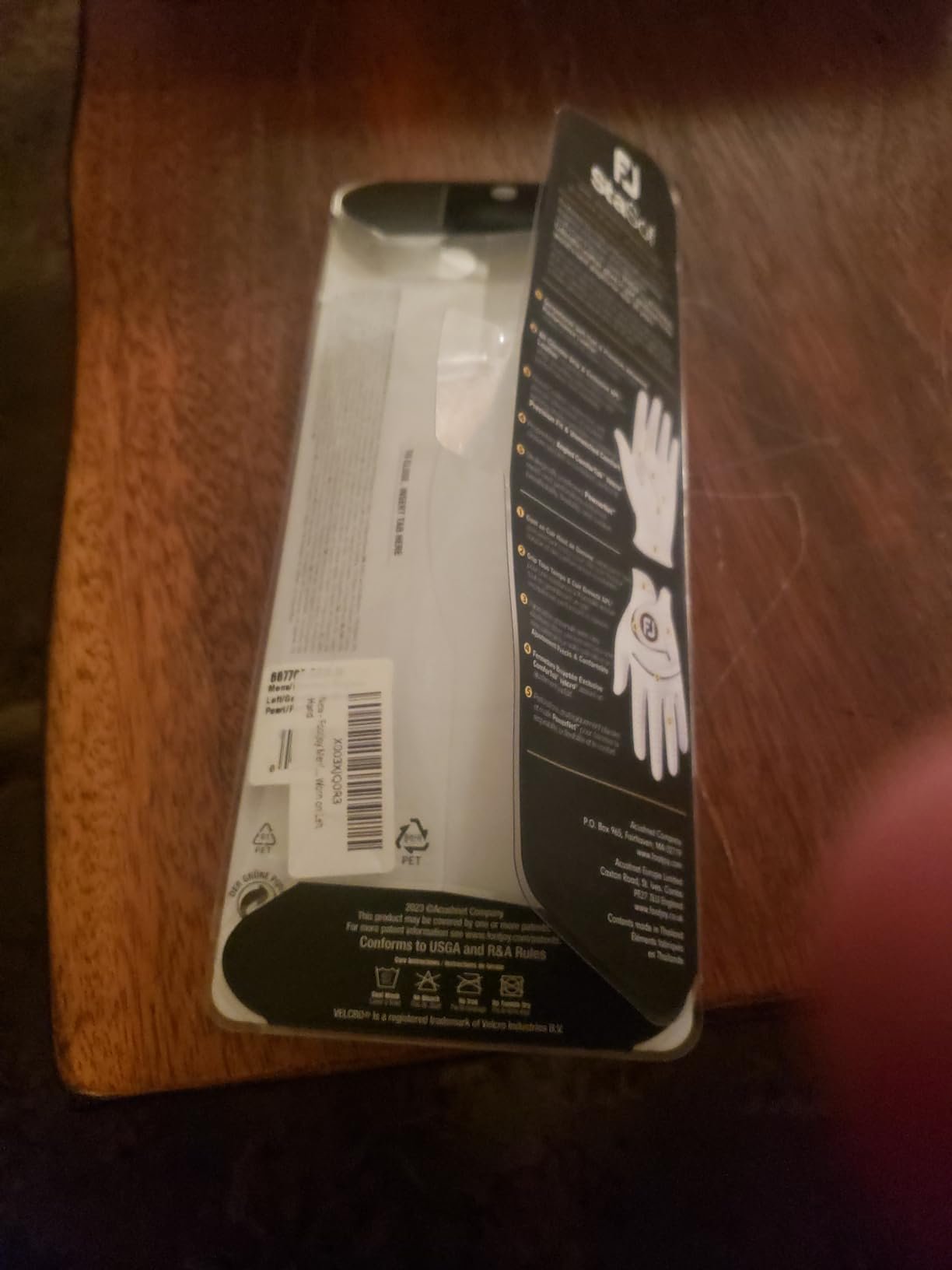
    The FootJoy StaSof has been the #1 glove on Tour for over three decades — and for good reason. Made from premium Cabretta leather with Powernet Mesh inserts on the back of the hand, it delivers an exceptionally soft feel, superior grip, and excellent breathability. The FiberSof leather maintains its performance round after round, and the adjustable closure ensures a consistent fit every time you put it on.

    Pros:

    • Premium Cabretta leather with outstanding grip and feel
    • Powernet Mesh back for superior breathability
    • Durable and long-lasting — worth the premium price

    Cons:

    • Pricier than synthetic alternatives
    • Leather degrades faster in wet conditions
    • May need to size down for snuggest fit

    Check Price on Amazon →

    2. Titleist Players Golf Glove — Best for Feel

    Titleist Players Golf Glove

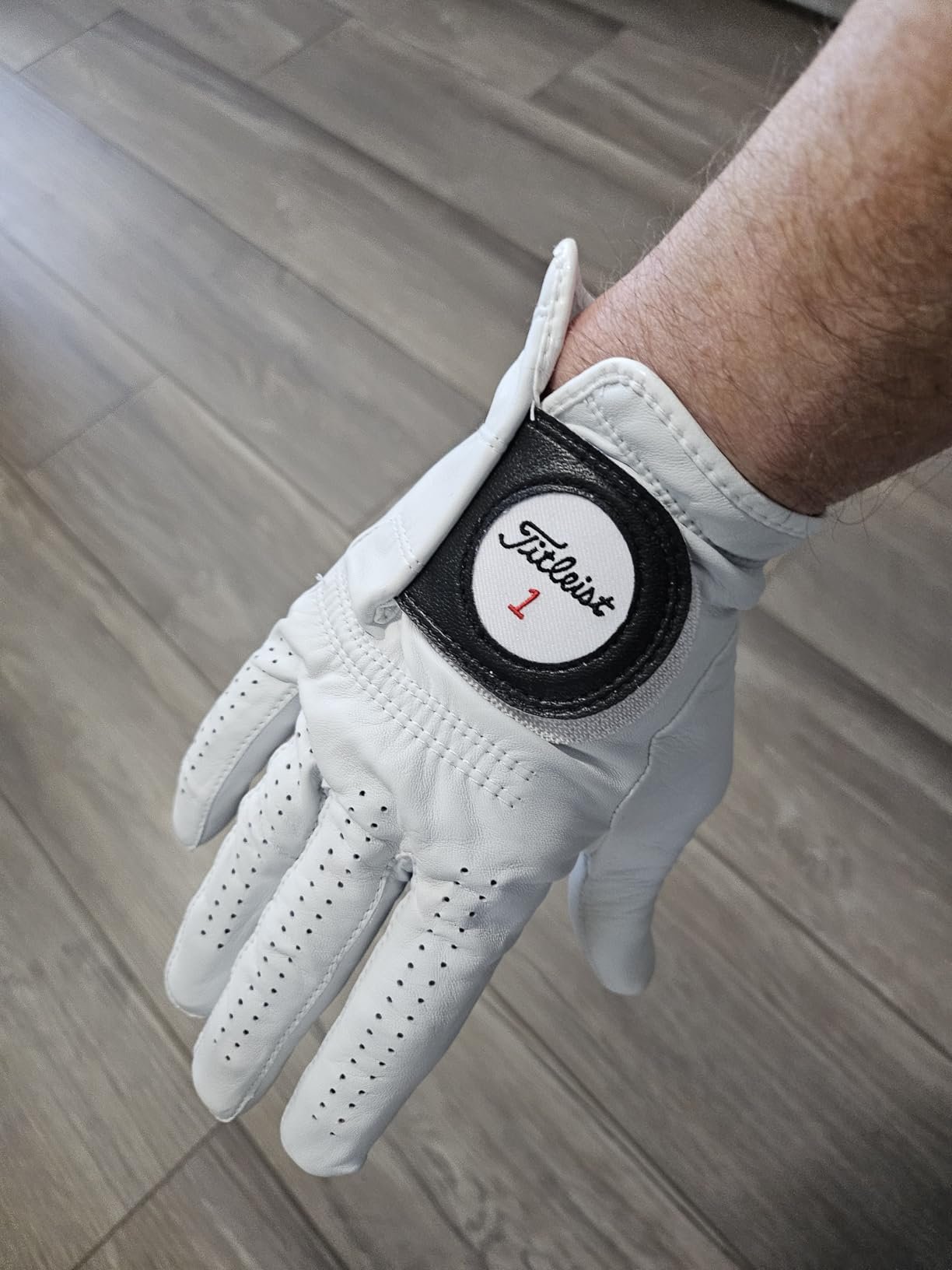
    The Titleist Players glove is a perennial favorite among serious golfers who prioritize feel above everything else. Crafted from tanned Cabretta leather, it offers an incredibly thin, tactile connection to the club. Netted satin inserts between the fingers improve breathability without compromising the glove’s clean look. It’s a close second to FootJoy in overall quality — some players actually prefer it for its slightly softer feel out of the box.

    Pros:

    • Ultra-thin Cabretta leather for maximum feel
    • Netted satin panels reduce bulk and improve breathability
    • Clean, classic look preferred by many Tour players

    Cons:

    • Not as durable as FootJoy StaSof over time
    • Limited all-weather performance
    • Premium price point

    Check Price on Amazon →

    3. Callaway Golf Dawn Patrol Glove — Best Value

    Callaway Golf Dawn Patrol Glove

    The Callaway Dawn Patrol is the best value glove on the market — full stop. It uses Opti-Fit technology to conform to your hand without excess bunching, and the Cabretta leather palm delivers better performance than you’d expect at this price point. Synthetic panels on the back improve durability and stretch. If you go through gloves quickly or just want a reliable everyday option without breaking the bank, the Dawn Patrol is the answer.

    Pros:

    • Excellent price-to-performance ratio
    • Opti-Fit technology for a clean, conforming fit
    • Available in a wide range of sizes

    Cons:

    • Doesn’t match premium leather gloves for pure feel
    • Synthetic panels slightly reduce breathability
    • Durability is good but not exceptional

    Check Price on Amazon →

    4. TaylorMade Stratus Tech Glove — Best All-Weather

    TaylorMade Stratus Tech Golf Glove

    For golfers who play in variable conditions, the TaylorMade Stratus Tech is the pick. Its synthetic-leather construction actually performs better as it gets damp, maintaining grip even in light rain. The 4-way stretch construction moves naturally with your hand, and the moisture-wicking design keeps your grip hand dry and cool. It’s also notably durable — you’ll get more rounds out of the Stratus Tech than most leather gloves.

    Pros:

    • Performs well in wet or humid conditions
    • 4-way stretch for natural hand movement
    • More durable than most leather options

    Cons:

    • Synthetic feel lacks the premium touch of Cabretta leather
    • Less ideal for players who prioritize tactile feedback
    • Slightly stiffer straight out of the packaging

    Check Price on Amazon →

    5. Bionic Men’s StableGrip 2.0 Golf Glove — Best for Comfort

    Bionic StableGrip 2.0 Golf Glove

    The Bionic StableGrip 2.0 is unlike any other glove on this list — it’s designed with input from orthopedic surgeons and is built to reduce hand fatigue during long rounds. Anatomical relief pads in the palm equalize pressure across your grip, and pre-rotated finger design reduces the twisting motion that causes wear. Made from premium Cabretta leather, it combines medical-grade ergonomics with Tour-quality feel. A great choice for golfers with hand or joint issues.

    Pros:

    • Orthopedic design reduces hand fatigue and grip pressure
    • Pre-rotated fingers for natural club grip position
    • Premium Cabretta leather with excellent durability

    Cons:

    • Higher price point than most gloves
    • Padded design may feel bulky to some players
    • Takes a round or two to fully break in

    Check Price on Amazon →

    Quick Comparison

    Glove Price Range Material Best For
    FootJoy StaSof $$ Cabretta Leather Best Overall
    Titleist Players $$ Cabretta Leather Best Feel
    Callaway Dawn Patrol $ Leather + Synthetic Best Value
    TaylorMade Stratus Tech $ Synthetic Best All-Weather
    Bionic StableGrip 2.0 $$$ Cabretta Leather Best for Comfort

    Final Verdict

    For most golfers, the FootJoy StaSof is the clear top pick — it’s been the #1 glove on Tour for a reason and delivers unmatched grip and feel at a fair price. If you’re on a budget, the Callaway Dawn Patrol overdelivers for the money. Play in wet conditions? Go with the TaylorMade Stratus Tech. For golfers dealing with hand fatigue or arthritis, the Bionic StableGrip 2.0 is worth every penny. Whatever your game, there’s a glove on this list built for you.

    Frequently Asked Questions

    What hand do you wear a golf glove on?

    Right-handed golfers wear the glove on their left hand (the lead hand), and left-handed golfers wear it on their right hand. Some golfers wear gloves on both hands in wet weather or for extra grip protection, but single-glove use is standard.

    How often should you replace a golf glove?

    Most golfers should replace their glove every 15–20 rounds, or sooner if you notice it becoming stiff, torn, or losing grip in the palm. Rotating between two gloves — alternating each round — can nearly double the lifespan of both.

    Should a golf glove feel tight?

    Yes, but not uncomfortably so. A properly fitted glove should be snug across the palm and fingers with no loose material, similar to a second skin. If you can pinch excess leather at the fingertips, size down. The glove will also stretch slightly after a few uses.

    Can you wash a golf glove?

    Leather gloves should not be machine washed — it breaks down the material. Instead, wipe them clean with a damp cloth and let them air dry flat. Synthetic gloves are more washable, but always air-dry them — never put them in a dryer.

  • Best Golf Shoes for Men 2026: Top 5 Picks for Every Golfer

    Your golf shoes are the foundation of every swing. While drivers and irons steal the spotlight, it’s your footwear that determines stability, energy transfer, and comfort across 18 holes of varying terrain. A poorly fitting shoe or one that lacks lateral support can cost you consistency off the tee and accuracy on approach shots. In 2026, the golf shoe market offers a remarkable range of options — from featherweight spikeless designs to waterproof tour-spec models built to handle morning dew and afternoon downpours.

    We tested and evaluated the top men’s golf shoes of 2026 across key criteria: traction, waterproofing, comfort over a full round, lateral stability during the swing, and value for money. Whether you’re walking 36 holes a week or riding the cart on weekend outings, there’s a shoe on this list that will elevate your game and keep your feet feeling fresh from the first tee to the 18th green.

    What to Look for in Men’s Golf Shoes

    Traction and Stability

    Traction comes from either replaceable soft spikes or integrated spikeless outsole lugs. Spiked shoes typically offer superior grip in wet conditions and on hilly terrain, while spikeless designs work better on hard surfaces and offer the versatility to wear off the course. Look for shoes with a wide forefoot platform and multi-directional traction pods — your downswing generates enormous lateral force, and the shoe needs to hold the ground without slipping.

    Waterproofing

    Waterproof construction is essentially mandatory for serious golfers who play in morning rounds with heavy dew or in unpredictable weather. Look for TPU overlays, GORE-TEX membranes, or fully bonded outsole constructions that prevent water ingress. A non-waterproof shoe will leave your feet soaked within 3 holes of a dewy morning round — and wet feet equals uncomfortable, distracted golf.

    Comfort and Fit

    Golf shoes need to feel great from the first hole to the last. Look for cushioned footbeds, breathable uppers, and a last (shoe shape) that matches your foot type. If you have wide feet, many brands offer wide-fit variants. A proper heel collar and padded tongue prevent blisters, while a snug midfoot hold keeps the shoe stable without restricting circulation. Break-in time should be minimal for a quality shoe.

    Best Golf Shoes for Men 2026 — Top 5 Picks

    1. FootJoy Pro/SLX — Best Overall Men’s Golf Shoe


    FootJoy Pro SLX Men's Golf Shoe

    FootJoy has been the #1 shoe on the PGA Tour for decades, and the Pro/SLX is their benchmark performance model. It combines a full-grain leather upper with a microfiber inner lining, providing exceptional durability and waterproof protection backed by a 2-year waterproof warranty. The FINE-TUNED FOAM outsole delivers a Tour-preferred fit that balances cushioning with responsive energy transfer through the swing. Available in both spiked and spikeless versions, the Pro/SLX is the choice of champions who need performance they can count on every single round.

    Pros:

    • 2-year waterproof warranty from FootJoy
    • FINE-TUNED FOAM outsole for Tour-level cushioning
    • Available in spiked and spikeless versions, wide fit options

    Cons:

    • Premium price point (~$160-180)
    • Leather requires some break-in period
    • Heavier than modern lightweight mesh designs

    Check Price on Amazon →

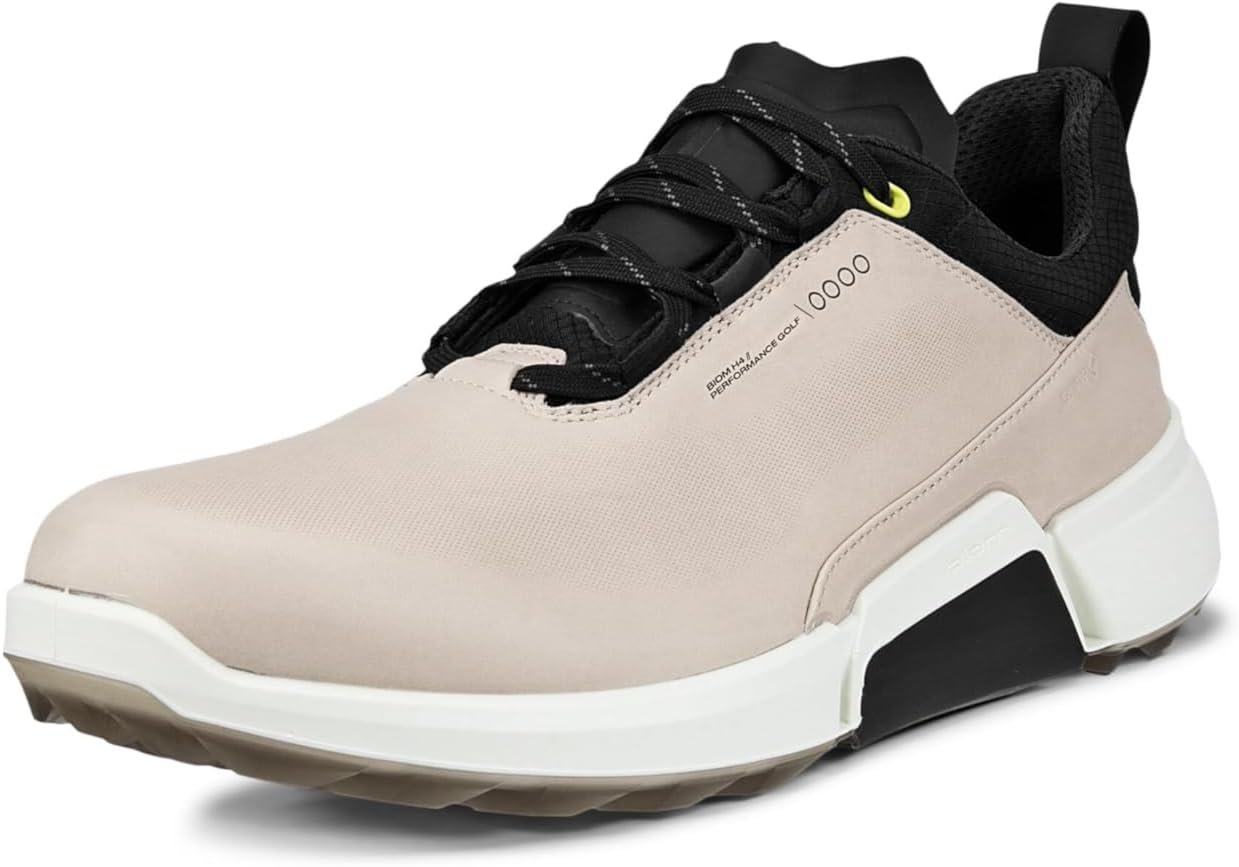
    2. ECCO Biom Hybrid 4 GORE-TEX — Best for Walking Golfers


    ECCO Biom Hybrid 4 GORE-TEX Golf Shoe

    ECCO’s Biom Hybrid 4 is the ultimate walking shoe for golfers who log serious mileage. The GORE-TEX lining provides 100% waterproof protection while maintaining breathability, so feet stay dry without overheating. ECCO’s proprietary FLUIDFORM technology injects cushioning directly into the outsole, eliminating layers and creating a natural, connected-to-the-ground feel that walking golfers love. The BIOM NATURAL MOTION last is anatomically shaped for a glove-like fit that adapts to your foot shape over time. This shoe feels better the more you wear it.

    Pros:

    • GORE-TEX waterproofing — 100% waterproof, breathable
    • FLUIDFORM direct-injection outsole for supreme comfort
    • Anatomical last breaks in and molds to your foot

    Cons:

    • High price (~$200-230)
    • Spikeless outsole less effective in very muddy conditions
    • Minimal heel padding versus padded foam alternatives

    Check Price on Amazon →

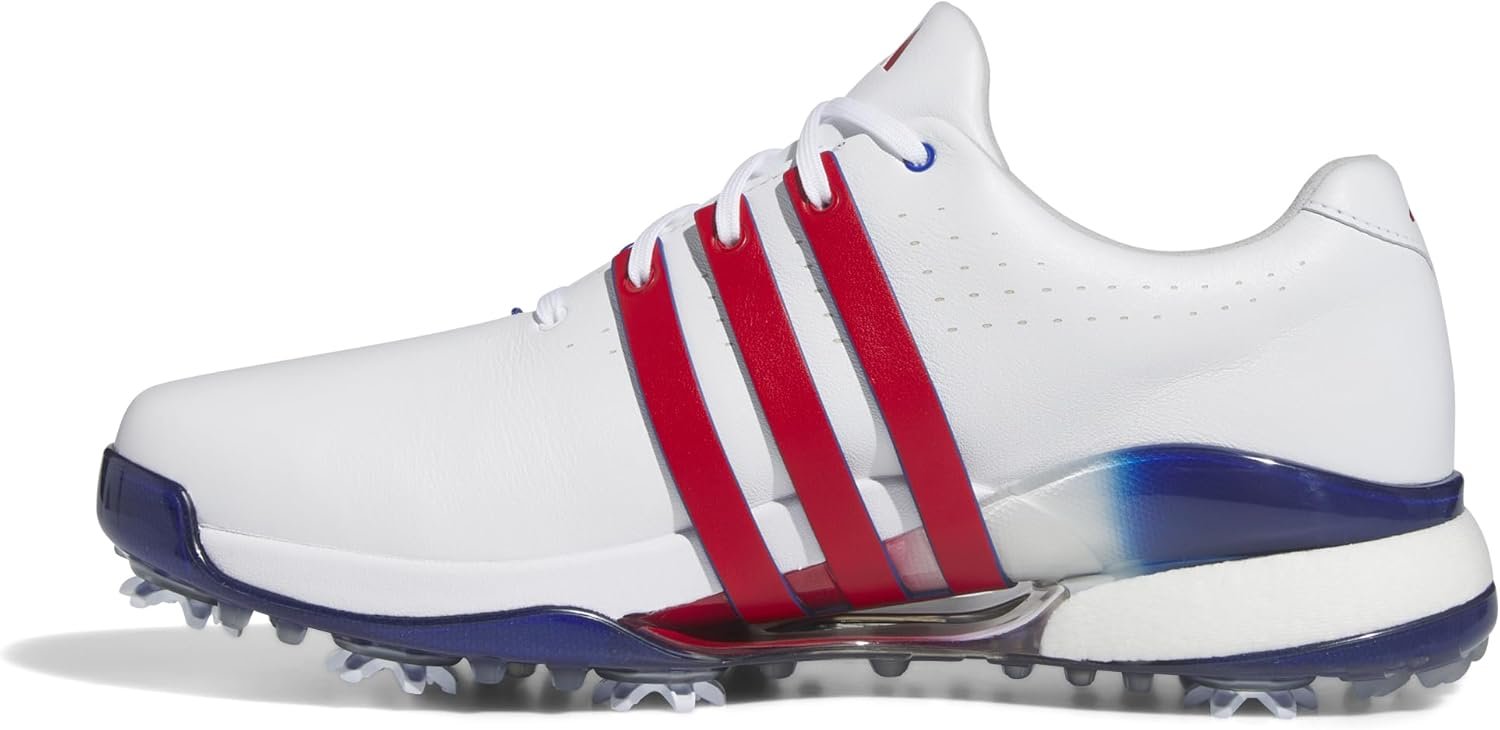
    3. Adidas Tour360 24 — Best for Swing Stability


    Adidas Tour360 24 Men's Golf Shoe

    The Adidas Tour360 24 is engineered specifically for golfers who generate high swing speeds and need maximum rotational stability. The 360WRAP construction wraps the midsole around the foot for 360 degrees of support during the swing, while the BOOST foam midsole provides incredible energy return and cushioning. Six strategically placed cleats on the outsole provide multi-directional grip, and the waterproof upper keeps feet dry in early morning conditions. This is the shoe of choice for players who want athletic performance in a golf-specific design.

    Pros:

    • 360WRAP construction gives unmatched lateral swing stability
    • BOOST midsole foam for all-day energy return
    • 6-cleat outsole optimized for rotational golf movement

    Cons:

    • Athletic styling may not suit traditionalists
    • Sizing can run slightly narrow — size up if between sizes
    • Cleats require periodic replacement

    Check Price on Amazon →

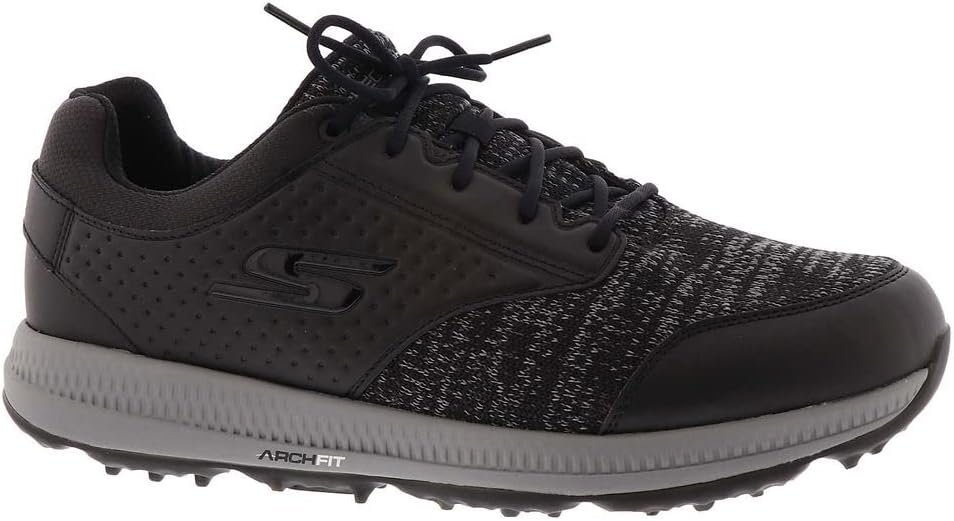
    4. Skechers Go Golf Elite 5 Range Spikeless — Most Comfortable All-Day Shoe


    Skechers Go Golf Elite 5 Range Spikeless Men's Golf Shoe

    Skechers has become one of the hottest names in golf footwear, and the Go Golf Elite 5 Range Spikeless is their best shoe yet. The ULTRA FLIGHT midsole foam provides pillow-soft cushioning that is noticeably more comfortable than most golf shoes out of the box. The water-repellent mesh upper keeps feet fresh and dry, and the spikeless outsole is versatile enough to wear straight from the car to the first tee. At under $100, it delivers comfort that rivals shoes twice its price — an outstanding pick for casual golfers and seniors who prioritize comfort above all else.

    Pros:

    • ULTRA FLIGHT foam — one of the softest ride in golf footwear
    • No break-in needed — comfortable from the very first round
    • Under $100 — exceptional comfort-to-price ratio

    Cons:

    • Spikeless grip less reliable in very wet or muddy conditions
    • Water-repellent (not fully waterproof)
    • Less swing stability than spiked performance shoes

    Check Price on Amazon →

    5. Under Armour Men’s Drive Fade Spikeless — Best Athletic Spikeless


    Under Armour Men's Drive Fade Spikeless Golf Shoe

    Under Armour’s Drive Fade Spikeless strikes the ideal balance between athletic looks and golf-specific performance. The UA HOVR cushioning system provides responsive energy return and a “zero gravity feel” that reduces leg fatigue over a full 18 holes. The engineered mesh upper is lightweight and breathable with a waterproof coating for wet conditions, and the spikeless outsole features rotational resistance lugs that deliver reliable traction without traditional cleats. At a mid-range price point, it’s a fantastic option for younger golfers and those who prefer a modern, cross-training aesthetic.

    Pros:

    • UA HOVR cushioning for energy return and reduced fatigue
    • Lightweight engineered mesh upper with waterproof coating
    • Modern athletic design that works on and off the course

    Cons:

    • Waterproof coating is not as robust as GORE-TEX or full leather
    • Spikeless design not ideal for tournament-level wet turf
    • Sizing reviews suggest ordering half-size up

    Check Price on Amazon →

    Quick Comparison

    Product Price Range Best For Rating
    FootJoy Pro/SLX ~$160-180 Serious / Tour-Level Play ⭐ 9.6/10
    ECCO Biom Hybrid 4 GTX ~$200-230 Walking Golfers ⭐ 9.4/10
    Adidas Tour360 24 ~$160-200 Athletic / High Swing Speed ⭐ 9.2/10
    Skechers Go Golf Elite 5 ~$80-100 Casual / Comfort-First ⭐ 8.8/10
    UA Drive Fade Spikeless ~$110-130 Younger / Athletic Golfers ⭐ 8.6/10

    Final Verdict

    For tournament-ready performance, the FootJoy Pro/SLX remains the gold standard — trusted by more Tour professionals than any other shoe on the market. Walking golfers who want all-day comfort in wet conditions should invest in the ECCO Biom Hybrid 4 GORE-TEX. Players who generate big swing speeds will appreciate the rotational support of the Adidas Tour360 24. Budget shoppers and seniors who want cloud-like comfort should reach for the Skechers Go Golf Elite 5.

    Frequently Asked Questions

    Are waterproof golf shoes worth it?

    Absolutely. If you play early morning rounds, live in a rainy climate, or play any courses with significant rough, waterproof shoes are essential. Wet feet destroy concentration and comfort — and many quality waterproof shoes now breathe well enough to stay comfortable all day. The ECCO Biom Hybrid 4 with GORE-TEX is the gold standard for waterproof breathability.

    Spiked vs. spikeless golf shoes — which is better?

    Spiked shoes provide superior grip in wet conditions and on hilly terrain, making them the better choice for serious golfers who play in variable weather. Spikeless shoes are more versatile, easier on greens, and comfortable to wear off the course. Most mid-handicap and casual golfers will be perfectly well served by a quality spikeless design.

    How long do golf shoes typically last?

    With regular maintenance, a quality golf shoe should last 2-4 seasons (roughly 50-80 rounds). Leather shoes last longest when treated with conditioner and stored properly. Replace spikes every 15-20 rounds to maintain grip. Spikeless shoes typically show tread wear after 40-60 rounds, at which point traction noticeably decreases.

    Should golf shoes fit differently than regular shoes?

    Golf shoes should fit snugly through the heel and midfoot with a bit of room in the toe box. Unlike running shoes, you want a secure heel lock to prevent the foot from sliding during the swing. Many golfers find they need a half-size up in athletic golf shoe styles (like adidas) versus traditional styles (like FootJoy). Always try on with golf socks when possible.

  • Best Golf Rangefinders 2026: Top 5 Picks for Every Budget

    A quality golf rangefinder is one of the smartest investments you can make on the course. Whether you’re dialing in a tight approach over a bunker or confirming the carry to a layup zone, precise yardage eliminates guesswork and shaves strokes off your round. The difference between a 150-yard shot and a 163-yard shot could mean the difference between a birdie putt and a bogey from the rough — and a rangefinder gives you that edge instantly.

    We evaluated the top golf rangefinders on the market for 2026, testing for accuracy, speed of acquisition, slope performance, ease of use, and value. Whether you’re a weekend warrior on a budget or a scratch golfer who demands tour-level precision, there’s a rangefinder on this list for you. Here are our five best picks heading into the 2026 season.

    What to Look for in a Golf Rangefinder

    Accuracy and Range

    The best rangefinders lock onto a flagstick from 400+ yards with ±1-yard accuracy. Look for models with flag-lock technology — usually confirmed by a vibration pulse — so you know you’re reading the pin and not a tree behind it. A minimum range of 800 yards gives you plenty of buffer for long par-5 approaches and layup decisions.

    Slope Compensation

    Slope-adjusted distance is a game-changer for practice rounds and casual play. A good slope rangefinder translates raw yardage into a “plays like” distance that accounts for uphill and downhill angles. Tournament-legal models include an external slope switch so you can disable the feature and stay legal in competition — look for that if you play any events.

    Build Quality and Usability

    Waterproofing, one-hand operation, magnetic cart mount compatibility, and a clear optic are non-negotiable for regular course use. Battery life also matters — rangefinders that use rechargeable USB-C batteries are increasingly convenient. A rubberized housing and compact form factor make a big difference over 18 holes in the heat or rain.

    Best Golf Rangefinders 2026 — Top 5 Picks

    1. Bushnell Tour V6 Shift — Best Overall


    Bushnell Tour V6 Shift Golf Rangefinder

    The Bushnell Tour V6 Shift is the gold standard for serious golfers who demand tournament-legal performance. It features a 1,300-yard max range with 6x magnification, Bushnell’s legendary Visual JOLT flag-lock vibration system, and an external Slope Switch that toggles slope mode on or off without removing the unit from your eye. The magnetic cart mount makes it the most hands-free experience on the market, and at ~$330, it delivers every feature a competitive golfer needs.

    Pros:

    • External slope switch for tournament-legal play
    • Visual JOLT vibration confirms flag lock every time
    • Magnetic cart mount included — no fumbling with clips

    Cons:

    • Premium price point (~$330)
    • No built-in GPS course mapping
    • Battery compartment cover can be fiddly in cold weather

    Check Price on Amazon →

    2. Blue Tees Golf Series 3 Max+ — Best Value with Slope


    Blue Tees Golf Series 3 Max+ Rangefinder

    Blue Tees Golf has earned a cult following among value-conscious golfers, and the Series 3 Max+ shows exactly why. This rangefinder hits up to 1,000 yards with 6x magnification, includes an external slope switch for tournament compliance, and runs on a rechargeable USB-C battery that lasts hundreds of rounds. The magnetic cart strip and pulse vibration flag lock make it feel like a $400 rangefinder at roughly half the price. An outstanding value pick for golfers of every level.

    Pros:

    • Rechargeable USB-C battery — no more CR2 batteries
    • External slope switch keeps it tournament legal
    • Exceptional value at under $270

    Cons:

    • Optic clarity slightly below Bushnell’s level
    • Waterproof rating not ideal for heavy downpours
    • Some users report occasional slope display lag

    Check Price on Amazon →

    3. Garmin Approach Z82 — Best Rangefinder + GPS Combo


    Garmin Approach Z82 Golf GPS Laser Rangefinder

    The Garmin Approach Z82 is the ultimate two-in-one for tech-savvy golfers: it combines a laser rangefinder accurate to within 10 inches with full GPS course data for 42,000+ courses worldwide. Through the viewfinder, you see a 2D course overlay showing distances to the green, hazards, and doglegs — all while targeting the flagstick with the laser. PlaysLike Distance adjusts for slope automatically, and the PinPointer function guides you to the green even when you can’t see the flag. It’s the most information-dense rangefinder you can buy.

    Pros:

    • GPS + laser in one unit — 42,000+ preloaded courses
    • 2D course overlay visible through the viewfinder
    • Laser accuracy within 10 inches at up to 1,000 yards

    Cons:

    • High price point (~$600+)
    • GPS maps only visible through eyepiece — no external screen
    • Bulkier than standard laser-only rangefinders

    Check Price on Amazon →

    4. Callaway Golf 300 Pro — Best Budget Slope Rangefinder


    Callaway Golf 300 Pro Slope Rangefinder

    The Callaway 300 Pro is the go-to choice for golfers who want a reliable slope rangefinder under $200. It delivers yardage out to 1,000 yards with ±1-yard accuracy, slope-adjusted distances for uphill and downhill shots, and a P.A.T. (Pin Acquisition Technology) that locks onto the flag with a confirming vibration. The optics are crisp, the ergonomics are solid, and at its price point it’s genuinely hard to beat. If you’re getting into rangefinders for the first time, this is where to start.

    Pros:

    • Best-in-class value at under $200
    • Slope-adjusted distances with P.A.T. pin lock vibration
    • Clear optics and comfortable one-hand grip

    Cons:

    • No magnetic cart mount included
    • Slope mode not easily tournament-switchable
    • Battery life shorter than USB-C rechargeable models

    Check Price on Amazon →

    5. REVASRI Golf Rangefinder — Best Rechargeable Budget Pick


    REVASRI Golf Rangefinder with Slope

    The REVASRI Golf Rangefinder punches well above its weight class, offering slope compensation with an external switch, 1,000-yard range, pin-lock vibration, and a rechargeable battery — all under $150. The 6x magnification is clear and the lightweight housing makes it easy to carry in a back pocket or clip to your cart. For beginner to mid-handicap golfers who want the core features without the premium price tag, this is the best entry-level rangefinder on Amazon in 2026.

    Pros:

    • Rechargeable battery included — no proprietary cells needed
    • External slope switch for tournament-legal mode
    • Sub-$150 price makes it incredibly accessible

    Cons:

    • Lesser-known brand vs. Bushnell or Callaway
    • Build quality not as premium as higher-end models
    • Customer support can be slower than major brands

    Check Price on Amazon →

    Quick Comparison

    Product Price Range Best For Rating
    Bushnell Tour V6 Shift ~$330 Competitive Golfers ⭐ 9.5/10
    Blue Tees Series 3 Max+ ~$250 Best Value Overall ⭐ 9.2/10
    Garmin Approach Z82 ~$600 Tech-Forward Golfers ⭐ 9.4/10
    Callaway 300 Pro ~$180 Budget-Conscious Golfers ⭐ 8.8/10
    REVASRI Rangefinder ~$130 Beginners & Casual Play ⭐ 8.4/10

    Final Verdict

    For most golfers, the Blue Tees Series 3 Max+ is the sweet spot — it delivers near-premium performance at a mid-range price, and the rechargeable battery alone makes it worth the upgrade from older budget models. Serious tournament players who need total reliability should invest in the Bushnell Tour V6 Shift. If you’re a data junkie who wants GPS and laser in one device, the Garmin Approach Z82 is unmatched. First-timers on a tight budget can’t go wrong starting with the Callaway 300 Pro.

    Frequently Asked Questions

    Are golf rangefinders legal in tournament play?

    Yes — laser rangefinders are legal under USGA and R&A rules, provided they only measure distance. Slope-compensated yardages are not permitted in official competition. Models with an external slope switch (like the Bushnell Tour V6 Shift or Blue Tees Series 3 Max+) allow you to disable slope mode for tournament rounds.

    How accurate are golf rangefinders?

    Most quality rangefinders are accurate to within ±1 yard under normal conditions. The Garmin Approach Z82 is accurate to within 10 inches. Accuracy can degrade slightly in rain, fog, or when targeting a small flag from extreme distance, so pin-lock vibration confirmation is key.

    Can I use a rangefinder in the rain?

    Many modern rangefinders are waterproof or at least water-resistant. The Bushnell Tour V6 Shift is IPX7 rated (fully waterproof), while others like the Blue Tees Series 3 Max+ offer splash resistance. Always check the waterproofing spec before taking your rangefinder out in wet conditions.

    Do I need slope on a rangefinder?

    Slope is highly recommended for practice rounds and casual play. It adds 5–15% more useful information on every approach shot by factoring in elevation change. If you only play casual golf and never enter competitions, get a slope rangefinder without hesitation. If you play tournaments, make sure it has a slope-off mode.

  • Best Golf Bags for Walking 2026: Top 5 Picks for Every Golfer

    Walking 18 holes is one of golf’s great pleasures — but only if you’re carrying the right bag. The wrong stand bag can turn a relaxing round into a slog, with uncomfortable straps, poor weight distribution, or too much heft dragging you down by the back nine. The right bag, on the other hand, almost disappears on your shoulder, letting you focus entirely on your game.

    Whether you’re a scratch golfer who walks every round or a weekend warrior finally ditching the cart, this guide covers the five best golf bags for walking in 2026. We’ve evaluated weight, strap comfort, storage, stand stability, and overall value to bring you picks for every type of golfer. Let’s get into it.

    What to Look for in a Golf Bag for Walking

    Weight

    For walking golfers, every ounce matters. The best carry bags weigh between 2.5 and 5.5 pounds. Ultra-light bags (under 3.5 lbs) are perfect for minimalist walkers; feature-rich bags in the 4.5–5.5 lb range offer better storage and organization. Avoid anything over 6 pounds if you plan to walk regularly.

    Dual Strap System

    A quality dual-strap system is non-negotiable. Look for padded, adjustable shoulder straps with hip support. The best systems distribute weight evenly across both shoulders, reducing fatigue significantly over 18 holes. Single-strap carry bags are fine for short rounds but will wear you out fast over a full 18.

    Stand Stability

    Your bag needs to stand reliably on uneven terrain — especially on hilly courses. Look for bags with self-deploying, anti-twist legs (often carbon fiber or reinforced plastic) with a wide stance. Some premium bags have five-leg stands for extra stability. Avoid bags with wobbly or narrow legs that tip over constantly.

    Storage and Organization

    Think about how many pockets you actually need. Walkers don’t need a 15-pocket cart bag, but you do need: a full-length apparel pocket, a valuables pocket (water-resistant or lockable), a ball pocket, an accessory pocket, and at minimum one drink holder. 4-way or 14-way club dividers both work fine for walking — it’s personal preference.

    Best Golf Bags for Walking 2026 — Top 5 Picks

    1. PING Hoofer Lite 2026 — Best Overall Walk Bag

    PING Hoofer Lite 2026 Stand Bag

    PING has been making elite carry bags for decades, and the 2026 Hoofer Lite continues that legacy. Weighing in around 4.5 pounds with a 4-way top and 9 strategically placed pockets, this bag delivers everything a serious walking golfer needs without unnecessary bulk. The dual-strap system is comfortable even after a full 18, and the stand is rock-solid on any terrain.

    The Hoofer Lite’s 4-way top makes club access fast and easy, while the hip pad keeps the bag from digging into your side on hilly courses. PING’s build quality is exceptional — this bag will last for years of regular walking. At around $260, it’s a legitimate investment that pays off with every round you walk.

    • ✅ Exceptional build quality and durability
    • ✅ Comfortable dual-strap system with hip pad
    • ✅ 9 pockets with excellent organization
    • ❌ Pricier than some competitors
    • ❌ 4-way top may feel limiting to some players
    • ❌ Limited color options compared to rivals

    Check Price on Amazon →

    2. Cobra Ultralight Pro Stand Bag — Best Lightweight Option

    Cobra Ultralight Pro Stand Golf Bag

    If you want maximum comfort on the course without sacrificing storage, the Cobra Ultralight Pro is your bag. Weighing under 5 pounds with 14-way full-length dividers, it gives you all the organizational benefits of a premium stand bag without the weight penalty. The balanced carry system evenly distributes load across both shoulders.

    Cobra’s carbon fiber stand legs are among the most stable in the game, and the anti-twist stand design means your bag stays put rather than spinning around when you set it down. The Ultralight Pro features a water-resistant bottom and a generous apparel pocket. For value at its price point, it’s hard to beat.

    • ✅ 14-way full-length dividers — excellent club protection
    • ✅ Stable carbon fiber stand legs
    • ✅ Great value for the feature set
    • ❌ Slightly heavier than ultra-lightweight competitors
    • ❌ Strap system not quite as padded as PING
    • ❌ Some users report the stand spreads unevenly over time

    Check Price on Amazon →

    3. Titleist Players 4 Stand Bag — Best for the Classic Golfer

    Titleist Players 4 Golf Stand Bag

    Titleist’s Players 4 is the gold standard carry bag for golfers who appreciate clean design and tour-level quality. The 4-way top with full-length dividers protects your clubs, while the lightweight construction keeps the bag comfortable across all 18 holes. Titleist’s Dual-Strap system is one of the best in the business — genuinely comfortable for a full day of walking.

    The Players 4 features 5 pockets including a velour-lined valuables pocket and a dedicated rangefinder pocket — a small but thoughtful touch. It’s not the lightest bag on this list, but the quality of materials and long-term durability make it a bag you’ll own for years. A perennial favorite among serious golfers who walk.

    • ✅ Tour-quality construction and materials
    • ✅ Excellent dual-strap carry system
    • ✅ Dedicated rangefinder pocket
    • ❌ Premium price tag
    • ❌ Fewer pockets than some competitors
    • ❌ Heavier than ultralight options

    Check Price on Amazon →

    4. Callaway Fairway 14 Stand Bag — Best for Versatility

    Callaway Golf Fairway 14 Stand Bag

    The Callaway Fairway 14 earns its spot by doing everything well. Fourteen full-length dividers keep every club neatly separated, and the comfortable dual-strap system makes it a pleasure to carry. What sets the Fairway 14 apart is its versatility — it works equally well as a carry bag or on a push cart or golf trolley, with a leg-locking strap and rubber cart base.

    Callaway includes 8 pockets, including a large apparel pocket and a separate cooler-compatible beverage pocket. The Lowrider top keeps your clubs low in the bag for better weight distribution. This is an ideal bag if you sometimes walk, sometimes take a cart, and want one bag that handles both situations flawlessly.

    • ✅ Works great as both carry and cart bag
    • ✅ 14-way full-length dividers
    • ✅ 8 pockets with smart organization
    • ❌ Heavier than pure walking-focused bags
    • ❌ Not ideal for hilly courses with heavy loads
    • ❌ Stand not as stable as top competitors

    Check Price on Amazon →

    5. TaylorMade FlexTech Stand Bag — Best for the Modern Golfer

    TaylorMade Golf FlexTech Stand Bag

    TaylorMade’s FlexTech features innovative FlexTech technology that helps the stand bag flex and adapt when placed on the ground, giving it superior stability on uneven terrain. The 5-way top with full-length dividers strikes a nice balance between organization and easy club access. The dual auto-deploy stand opens smoothly every time.

    With 6 pockets and a comfortable Dual Strap system, the FlexTech holds its own against pricier competition. The cooler pocket and velour-lined valuables pocket are practical features for a day on the course. TaylorMade’s modern aesthetic makes this one of the best-looking bags on this list — a genuine performance bag that also turns heads at the club.

    • ✅ FlexTech stand adapts to uneven terrain
    • ✅ Smooth, reliable auto-deploy stand
    • ✅ Sharp modern design
    • ❌ Fewer pockets than Callaway or COBRA
    • ❌ 5-way top limits individual club protection
    • ❌ Strap padding could be improved

    Check Price on Amazon →

    Golf Bags for Walking 2026 — Comparison Table

    Bag Weight Top Pockets Best For
    PING Hoofer Lite 2026 ~4.5 lbs 4-way 9 Best Overall
    Cobra Ultralight Pro ~4.8 lbs 14-way 8 Best Value
    Titleist Players 4 ~5.0 lbs 4-way 5 Tour Quality
    Callaway Fairway 14 ~5.4 lbs 14-way 8 Versatility
    TaylorMade FlexTech ~5.0 lbs 5-way 6 Modern Design

    Final Verdict

    For most walking golfers, the PING Hoofer Lite 2026 is the clear top pick. It combines excellent carry comfort, smart storage, reliable stand stability, and PING’s legendary build quality in one package. If budget is a concern, the Cobra Ultralight Pro delivers outstanding features at a lower price point. Golfers who need a bag that works both on the course and on a cart should look at the Callaway Fairway 14 for its exceptional versatility.

    Whatever bag you choose, make sure it fits your walking style. Walk a few holes with it if you can before committing, and pay attention to how the straps feel by hole 14. Your back and shoulders will thank you for choosing wisely.

    Frequently Asked Questions

    What’s the lightest golf bag for walking?

    Among premium carry bags, the Sun Mountain Eclipse series weighs around 3 pounds, making it one of the lightest you can buy. However, for a balance of light weight and real-world usability, we prefer bags in the 4–5 pound range like the PING Hoofer Lite and Cobra Ultralight Pro, which offer better storage and durability without too much added weight.

    Are stand bags better than cart bags for walking?

    Absolutely. Stand bags are designed specifically for carrying — they have dual shoulder straps, lighter weight construction, and self-standing legs. Cart bags are optimized for riding on a golf cart with larger pockets and heavier construction. If you walk even occasionally, a stand bag is the right choice.

    How many pockets do I need in a walking bag?

    At minimum, you want 5 pockets: an apparel pocket (large enough for a jacket), a valuables pocket, a ball pocket, an accessory pocket, and a drink holder or pocket. More than 9 pockets starts adding weight without much functional benefit for walking golfers. Focus on pocket quality and accessibility over sheer quantity.

    Is a 14-way divider worth it in a walking bag?

    It depends on your preference. 14-way dividers provide the best individual club protection and make organizing your bag easier. However, they add slight weight and cost. If you don’t mind grouping clubs together, a 4-way or 5-way top saves weight and is equally functional. Tour pros typically use 4-way or 5-way tops in their tour bags.

  • Best Golf Balls for Beginners 2026: Top 5 Picks by Experts

    Picking the right golf ball as a beginner can feel overwhelming — there are hundreds of options on the market. But here’s the truth: golf ball choice matters more than most beginners think. The wrong ball can cost you distance, feel, and greenside control. The right ball helps you swing with confidence, fly straighter, and spend less money replacing balls you’ve lost in the woods.

    We’ve done the research so you don’t have to. Here are the best golf balls for beginners in 2026.

    What Makes a Good Beginner Golf Ball?

    • Low compression: Slower swing speeds compress the ball better with a low-compression core, generating more distance.
    • Soft feel: More feedback on every shot — helps you learn what a good strike feels like.
    • Durability: Beginners lose more balls and hit more cart paths. You want something that holds up.
    • Straight flight: Reduced spin means the ball flies straighter, correcting hooks and slices.
    • Affordable: You will lose balls. A lot of them. Don’t play $50/dozen Pro V1s yet.

    Best Golf Balls for Beginners 2026 — Quick Picks

    BallCompressionPrice/DozenBest For
    Callaway Supersoft35 (Ultra-low)~$30Overall Best
    Titleist TruFeel60 (Low)~$30Best Feel
    Srixon Soft Feel60 (Low)~$25Best Distance
    Noodle34 (Ultra-low)~$20Best Budget
    Callaway Chrome Soft65 (Low-mid)~$45Best Premium Upgrade

    1. Callaway Supersoft — Best Overall Beginner Golf Ball

    Callaway Supersoft Golf Balls 2025

    The Callaway Supersoft has been the #1 best-selling golf ball in the US for years — and for good reason. With an ultra-low 35 compression rating, it’s one of the softest balls on the market. Slower swing speeds (under 90 mph) will get maximum distance from this ball, and its HEX Aerodynamics pattern reduces drag and promotes a penetrating, straight ball flight.

    Key Features

    • Ultra-low 35 compression — perfect for swing speeds under 90 mph
    • Hybrid cover provides extra greenside touch and feel
    • HEX Aerodynamics pattern for reduced drag and straighter flight
    • Trionomer cover material offers exceptional durability
    • 2025 updated formula — improved everything from the already-excellent prior version

    Who it’s for: Any beginner, full stop. The Supersoft is forgiving on mishits, long off the tee, and soft around the greens. It’s the all-around package at a price that won’t hurt when you find the water hazard.
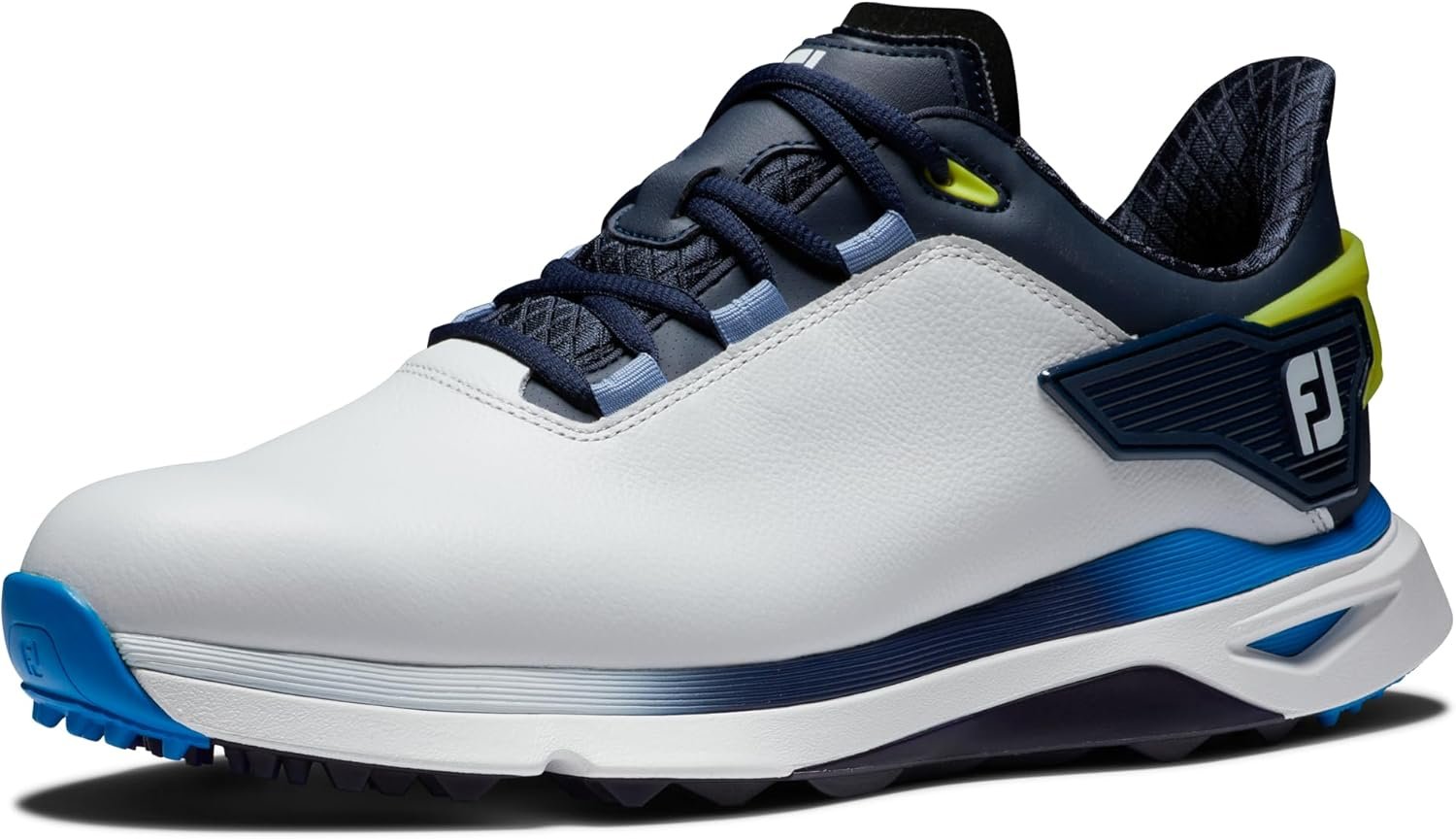
    👉 Check Price on Amazon →

    2. Titleist TruFeel — Best Feel for Beginners

    Titleist TruFeel Golf Balls

    Titleist makes the world’s most popular golf ball (the Pro V1), and the TruFeel brings that same legendary quality to an affordable, beginner-friendly package. It’s Titleist’s softest ball, with a low 60 compression and a TruFlex cover that delivers exceptional feel across all shots — from full driver swings to delicate chips around the green.

    Key Features

    • Low 60 compression for soft feel and easy compression
    • TruFlex cover for consistent feel from tee to green
    • Spherically-tiled 376 tetrahedral dimple design for consistent flight
    • Great short game control for developing greenside feel
    • Titleist quality control — every ball is consistent

    Who it’s for: Beginners who want to develop greenside feel and learn what a quality ball feels like. The TruFeel is soft without being mushy, and teaches you to appreciate feel — a skill that pays off as you improve.

    👉 Check Price on Amazon →

    3. Srixon Soft Feel — Best Distance for Beginners

    Srixon Soft Feel Golf Balls

    The Srixon Soft Feel is a criminally underrated beginner ball. While Callaway and Titleist dominate the marketing conversation, Srixon quietly produces one of the best low-compression balls on the market. The 13th generation Soft Feel packs in tour-level technology at a price point that makes sense for golfers still working on their game.

    Key Features

    • 338 Speed Dimple Pattern for maximum distance and consistent flight
    • FastLayer Core transitions from soft center to firm outer edge for distance
    • Thin ionomer cover for durability and feel
    • Low 60 compression — designed for slower swing speeds
    • Exceptional value — tour-adjacent quality at beginner prices

    Who it’s for: Beginners focused on maximizing distance. The Srixon Soft Feel’s FastLayer Core technology gives a little extra pop without sacrificing the soft feel you need as a developing player.

    👉 Check Price on Amazon →

    4. Noodle Long & Soft — Best Budget Beginner Golf Ball

    Noodle Long and Soft Golf Balls

    Look, you’re a beginner. You will lose golf balls. A lot of them. The Noodle Long & Soft exists precisely for this stage of your game. With an ultra-low 34 compression rating and a price tag that makes losing them painless, the Noodle lets you swing freely without stressing about every ball that finds the rough, the pond, or your neighbor’s yard.

    Key Features

    • Ultra-low 34 compression — as soft as it gets
    • Iothane cover for excellent durability and soft feel
    • Low driver spin for a straighter, longer ball flight
    • Comes in value packs — stock up and don’t worry
    • One of the best-selling budget golf balls for over two decades

    Who it’s for: New golfers who know they’ll lose plenty of balls and want to minimize the financial sting while still playing something that performs. Buy a two-dozen pack and just enjoy the game.

    👉 Check Price on Amazon →

    5. Callaway Chrome Soft — Best Premium Upgrade for Improving Beginners

    Callaway Chrome Soft Golf Balls 2026

    Once you’ve been playing for 6–12 months and your handicap is dropping, it’s time to consider stepping up to the Callaway Chrome Soft. This is a tour-caliber ball used by PGA Tour professionals, but its soft feel and low compression make it accessible to improving amateurs. It bridges the gap between beginner and player balls perfectly.

    Key Features

    • Ultra-low 65 compression — still very accessible for moderate swing speeds
    • Graphene-infused Dual SoftFast Core for distance and spin separation
    • 4-piece construction for precise control on all shots
    • Urethane cover for professional-grade greenside spin
    • Used by top professionals on the PGA Tour

    Who it’s for: Beginners who have been playing 6+ months, are breaking 100 consistently, and want to start experiencing what a premium ball feels like. The Chrome Soft is a significant step up in greenside control.

    👉 Check Price on Amazon →

    Golf Ball Buying Guide for Beginners

    Understanding Compression

    Compression is the most important factor for beginners. It describes how much the ball compresses against the clubface at impact.

    • Low compression (under 70): Easier to compress with slower swing speeds, giving more distance. Soft feel. Best for beginners.
    • Mid compression (70–90): Suits mid-handicappers with moderate swing speeds.
    • High compression (90+): Designed for fast swing speeds (95+ mph). Not ideal for most beginners.

    Rule of thumb: If your driver swing speed is under 90 mph, stick to low-compression balls. They’ll give you more distance and feel better on contact.

    1-Piece vs. 2-Piece vs. Multi-Layer Balls

    • 1-piece: Found on driving ranges. Not for actual play.
    • 2-piece: Most beginner balls. Simple core + cover construction. Maximum distance, durable, affordable. This is what you want.
    • 3 or 4-piece: Multi-layer construction offers spin separation (distance on long shots, spin on short shots). Best for lower handicappers.

    As a beginner, a quality 2-piece ball like the Callaway Supersoft or Srixon Soft Feel hits the sweet spot perfectly.

    Should Beginners Buy Used Golf Balls?

    Yes — with caveats. Grade A or mint condition used balls from reputable sellers are a great value. Avoid “lake balls” or heavily scuffed balls — water infiltration can change compression and performance unpredictably. Sites like GlobalGolf and LostGolfBalls.com sell quality used balls at a significant discount.

    What About Color Golf Balls?

    Colored balls (yellow, orange, green) are purely a personal preference. Many beginners find yellow balls easier to spot in rough and against cloudy skies. Performance is identical to white balls of the same model.

    Final Thoughts

    Don’t overthink golf balls as a beginner. The Callaway Supersoft is your best all-around pick — it’s low compression, long, soft, durable, and affordable. If budget is the priority, grab a couple dozen Noodles and just play.

    As your game improves and you start breaking 90, revisit this list and consider stepping up to the Callaway Chrome Soft for better greenside control. Until then, the most important thing is getting out there and playing. ⛳

    Frequently Asked Questions

    What is the best golf ball for a beginner?

    The Callaway Supersoft is the best overall beginner golf ball. Its ultra-low 35 compression, straight flight, and soft feel make it ideal for developing golfers with slower swing speeds.

    Should beginners use soft or hard golf balls?

    Soft, low-compression balls are almost always better for beginners. They compress more easily at slower swing speeds, generating more distance, and they provide better feedback on every shot.

    How many golf balls should a beginner buy?

    Buy at least two dozen to start. Beginners average 3–5 lost balls per round in the early stages. Having enough supply means you focus on the game, not on running out of balls.

    Are expensive golf balls worth it for beginners?

    No. Premium balls like the Pro V1 are engineered for golfers with fast swing speeds and consistent ball-striking. As a beginner, you won’t unlock their benefits — and you’ll lose them at the same rate as cheaper balls. Stick to the options on this list until you’re consistently breaking 90.

  • Best Golf Putters for Beginners 2026: Our Top 5 Picks

    Putting accounts for roughly 40% of your strokes on the golf course. As a beginner, choosing a forgiving, easy-to-align putter can shave strokes off your score faster than any other club upgrade. We tested and researched the top options to bring you this definitive list of the best golf putters for beginners in 2026.

    What to Look for in a Beginner Putter

    • Mallet vs. Blade: Mallets offer more forgiveness on off-center strikes — ideal for inconsistent beginner strokes.
    • Alignment Aids: Visual lines and dots help you square the face at address.
    • Soft Insert Feel: Urethane or polymer inserts give better feedback and more consistent distance control.
    • High MOI: Moment of Inertia — the higher the number, the less the putter twists on mishits.
    • Length: Standard is 34–35 inches. Most beginners do well in this range.

    Best Golf Putters for Beginners 2026 — Quick Picks

    PutterStylePriceBest For
    Odyssey AI-One RossieBlade/Mallet Hybrid~$245Overall Best
    Cleveland HB Soft 2 #10.5Mallet~$160Best Budget
    TaylorMade Spider XMallet~$200Most Forgiving
    Wilson Infinite PutterMallet~$80Best Value
    Odyssey White Hot OG RossieBlade~$165Best Feel

    1. Odyssey AI-One Rossie — Best Overall Beginner Putter

    Odyssey AI-One Rossie Putter

    The Odyssey AI-One Rossie is our top pick for beginners in 2026, and it’s not close. Odyssey’s revolutionary AI-One insert uses artificial intelligence to optimize the face pattern — resulting in more consistent ball speed across the entire face. Mishits stay closer to your target, which is exactly what you need when you’re still developing your stroke.

    Key Features

    • AI-designed insert minimizes distance loss on off-center hits
    • Versa alignment system with high-contrast visuals
    • Rossie shape works for both arc and straight-through strokes
    • Adjustable weighting for custom feel
    • Amazon’s Choice with 4.6 stars from 110+ reviews

    Who it’s for: Beginners who want to invest in a putter they won’t outgrow. The AI-One technology is used by PGA Tour professionals — you’re getting real performance, not a “beginner” compromise.

    👉 Check Price on Amazon →

    2. Cleveland HB Soft 2 #10.5 — Best Budget Beginner Putter

    Cleveland HB Soft 2 Putter Model 10.5

    If you want a high-quality mallet putter without breaking the bank, the Cleveland HB Soft 2 #10.5 delivers tour-inspired performance at an accessible price point. Cleveland has been making excellent putters for decades, and the HB Soft 2 continues that tradition.

    Key Features

    • Speed Optimized Face Technology for consistent distance
    • Full mallet design with high MOI for maximum forgiveness
    • Soft polymer insert provides excellent feel and feedback
    • Plumber’s neck hosel suits a slight arc stroke
    • Available in 33–35 inch lengths

    Who it’s for: Budget-conscious beginners who want a genuinely good putter without overspending. This is a workhorse that punches well above its price.

    👉 Check Price on Amazon →

    3. TaylorMade Spider X — Most Forgiving Beginner Putter

    TaylorMade Spider X Putter

    The TaylorMade Spider X is one of the most forgiving putters ever made. Used by Rory McIlroy and other PGA Tour stars, the Spider’s perimeter weighting and high-MOI design make it incredibly stable — even on off-center strikes. Beginners will appreciate how it keeps the putter face square through impact.

    Key Features

    • Extremely high MOI for stability on mishits
    • Pure Roll insert with 45° grooves for superior topspin
    • True Path Alignment System for easy setup
    • Steel wireframe construction controls center of gravity
    • Proven PGA Tour design at a beginner-friendly price

    Who it’s for: Beginners who struggle with off-center hits and want maximum forgiveness. The Spider will bail you out of more mishits than any other putter on this list.

    👉 Check Price on Amazon →

    4. Wilson Infinite Putter — Best Value Under $100

    Wilson Infinite Bucktown Putter

    The Wilson Infinite series punches way above its weight class. Don’t let the budget price fool you — Wilson’s Infinite putters have received serious praise from instructors and golfers alike for their consistent performance and forgiving design. For beginners who are still figuring out whether they’ll stick with golf, this is a smart buy.

    Key Features

    • Infinity Edge design maximizes perimeter weighting
    • Firm, consistent feel across the face
    • Strong alignment aids for easy setup
    • Great mid-range distance control
    • Exceptional value — performance well above the price

    Who it’s for: New golfers who want a reliable putter without committing to a premium price. If you fall in love with golf, you can upgrade. If not, you haven’t wasted money.

    👉 Check Price on Amazon →

    5. Odyssey White Hot OG Rossie — Best Feel for Beginners

    Odyssey White Hot OG Rossie Putter

    The Odyssey White Hot OG is a modern reissue of one of the most beloved putters in golf history. The White Hot insert has an almost cult-like following — it delivers an unmistakable soft, buttery feel at impact that gives you instant feedback on whether you’ve struck the ball well. This is the putter that teaches you to putt.

    Key Features

    • Legendary White Hot urethane insert — industry-standard feel
    • Classic Rossie shape suits most stroke types
    • Slant neck hosel for easy alignment
    • Great feedback on both good and bad strikes
    • Currently on sale — significant discount off retail

    Who it’s for: Beginners who want to develop feel and intuition on the greens. The White Hot insert’s feedback is unmatched at this price — you’ll know when you’ve made a good stroke.
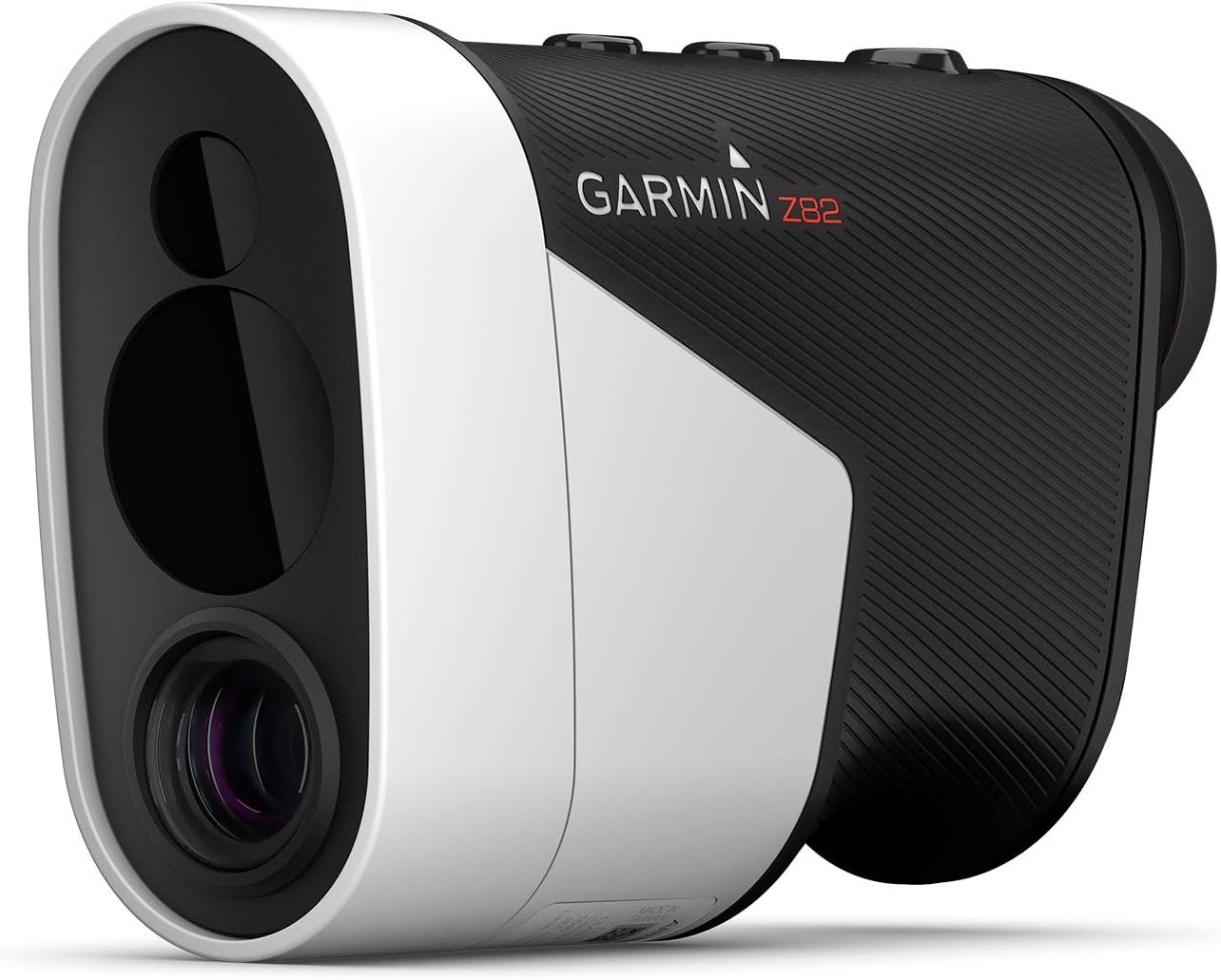
    👉 Check Price on Amazon →

    How to Choose the Right Beginner Putter

    Mallet vs. Blade: Which Is Better for Beginners?

    For most beginners, mallets are the better choice. Here’s why:

    • Mallets have larger heads and more weight distributed around the perimeter, which increases forgiveness on mishits. They also tend to have better alignment aids.
    • Blades are more traditional and offer better feedback, but are less forgiving. They’re better for golfers who have developed a consistent stroke.

    Our recommendation: Start with a mallet. As your stroke improves and becomes more consistent, you can experiment with blades if you prefer the feel.

    What Length Putter Do I Need?

    Most adult golfers use a 33–35 inch putter. A simple guideline: stand in your natural putting posture with arms hanging down. Your hands should be just above your knees. Here’s a quick reference:

    • Under 5’5″: 32–33 inch putter
    • 5’5″ – 5’9″: 33–34 inch putter
    • 5’9″ – 6’1″: 34–35 inch putter
    • Over 6’1″: 35+ inch putter

    Should I Get a Face-Balanced or Toe-Hang Putter?

    This depends on your putting stroke:

    • Face-balanced putters (the face points up when balanced) suit a straight-back, straight-through stroke. Most beginner mallets are face-balanced.
    • Toe-hang putters (the toe drops when balanced) suit an arc stroke where the face opens and closes through impact.

    As a beginner, don’t overthink this. A face-balanced mallet is a safe choice for developing your stroke.

    Final Thoughts

    The Odyssey AI-One Rossie is our top pick for most beginners — it’s got tour-level technology, excellent forgiveness, and strong reviews. If budget is a concern, the Cleveland HB Soft 2 is an outstanding value. And if you just want maximum forgiveness at all costs, the TaylorMade Spider X won’t let you down.

    Whatever you choose, practice your stroke regularly and focus on speed control. A consistent putting stroke with any of these putters will save you more strokes than any other part of your game. Now get out there and drain some putts! 🏌️⛳

    Frequently Asked Questions

    What is the best putter for a beginner golfer?

    The Odyssey AI-One Rossie is our top recommendation. It combines AI-optimized forgiveness with strong alignment aids and excellent feel — perfect for beginners building their putting stroke.

    Should beginners use a blade or mallet putter?

    Mallets are generally better for beginners due to their higher forgiveness, better alignment aids, and more stability on off-center hits.

    How much should a beginner spend on a putter?

    You don’t need to spend a fortune. Budget $80–$200 for a quality beginner putter. The Wilson Infinite (~$80) and Cleveland HB Soft 2 (~$160) are both excellent options. If you want to invest in something you’ll keep long-term, the Odyssey AI-One (~$245) is worth every penny.